By Jannis Kostelnik
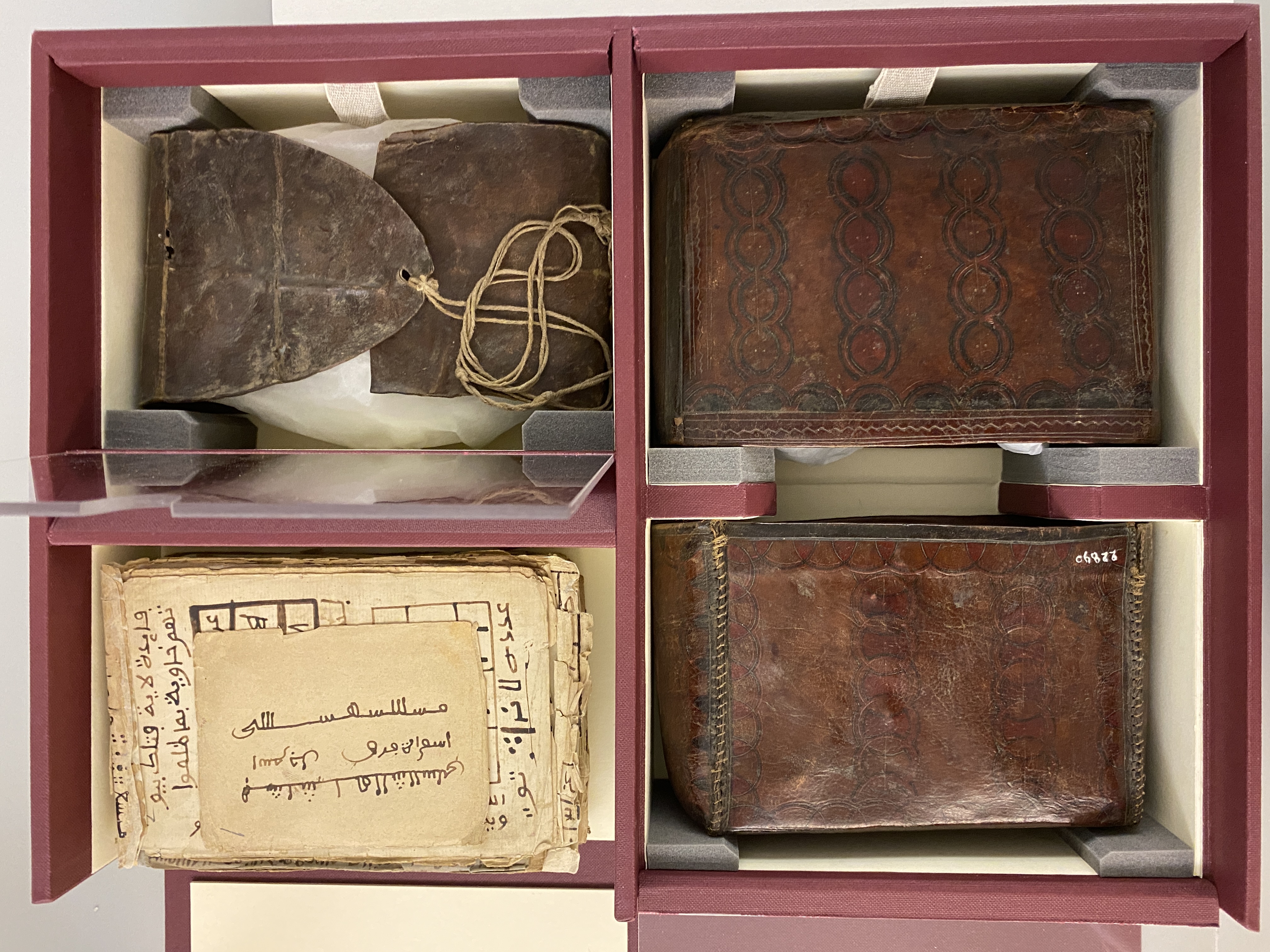
The Wellcome Collection in central London is a treasure trove for researchers from all strands of the humanities, and African studies are no exception. Wellcome’s extensive holdings contain a corpus of six manuscripts from different areas of West Africa. These manuscripts are written in Arabic script, mainly in the Arabic language interspersed with single words and annotations in various other African languages – a phenomenon known in African studies as ʿajamī. In line with the general focus of the Wellcome Collection, the manuscripts are on medicine in the widest sense, containing instructions for traditional herbal remedies combined with religious elements, but also esoteric sections on topics such as talismans with apotropaic functions, and occasionally also prayers and poems.
One of these manuscripts, WMS Arabic 742, is made even more remarkable by its materiality. It contains a number of folios which I referred to as ‘recycled’ in my recently published article in the Journal of the German Oriental Society (Kostelnik, 2026). Why recycled? These folios are made from paper that had originally been produced for very specific applications, often related to processes of British colonial administration in West Africa, but they had not been used for these. Instead, they were removed from their contexts and reused in a very different process of knowledge production – the creation of medico-religious manuscripts.
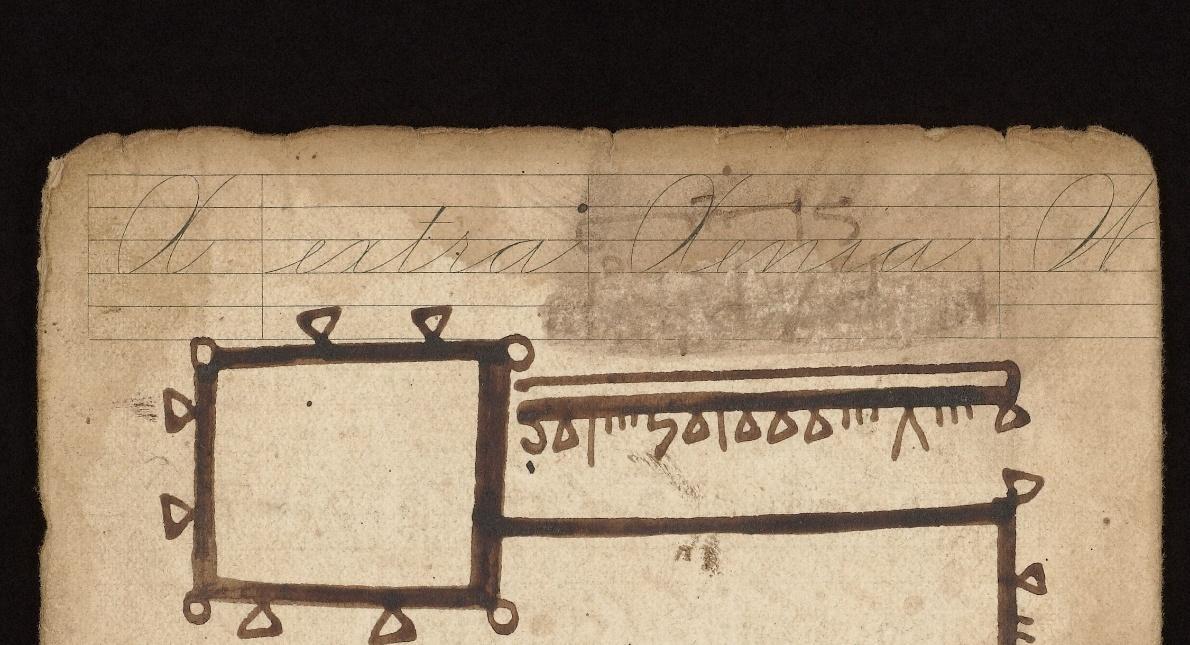
These recycled folios can be separated into three categories. First, we find ruled paper, similar to the kind still used for notebooks or index cards today. Ruled paper occurs in different configurations and different colours of ruling within the manuscript. Second, we find folios that had originally been printed on in English but later were overwritten with Arabic-script handwriting completely unrelated to the printed content. Some examples are folios taken out of memorandum books and several folios from a workbook on Spencerian penmanship (Fig. 2). I consider this distinct from other kinds of paper reuse, e.g., by employing palimpsesting techniques – a topic scarcely researched in West African manuscript studies, which has only been first explored in the work of Khaoula Trad and Darya Ogorodnikova (2025) over the last few years.
While the two previous categories are relatively inconspicuous and require close viewing of the manuscript to be identified, the third is arguably very eye-catching: blue paper.
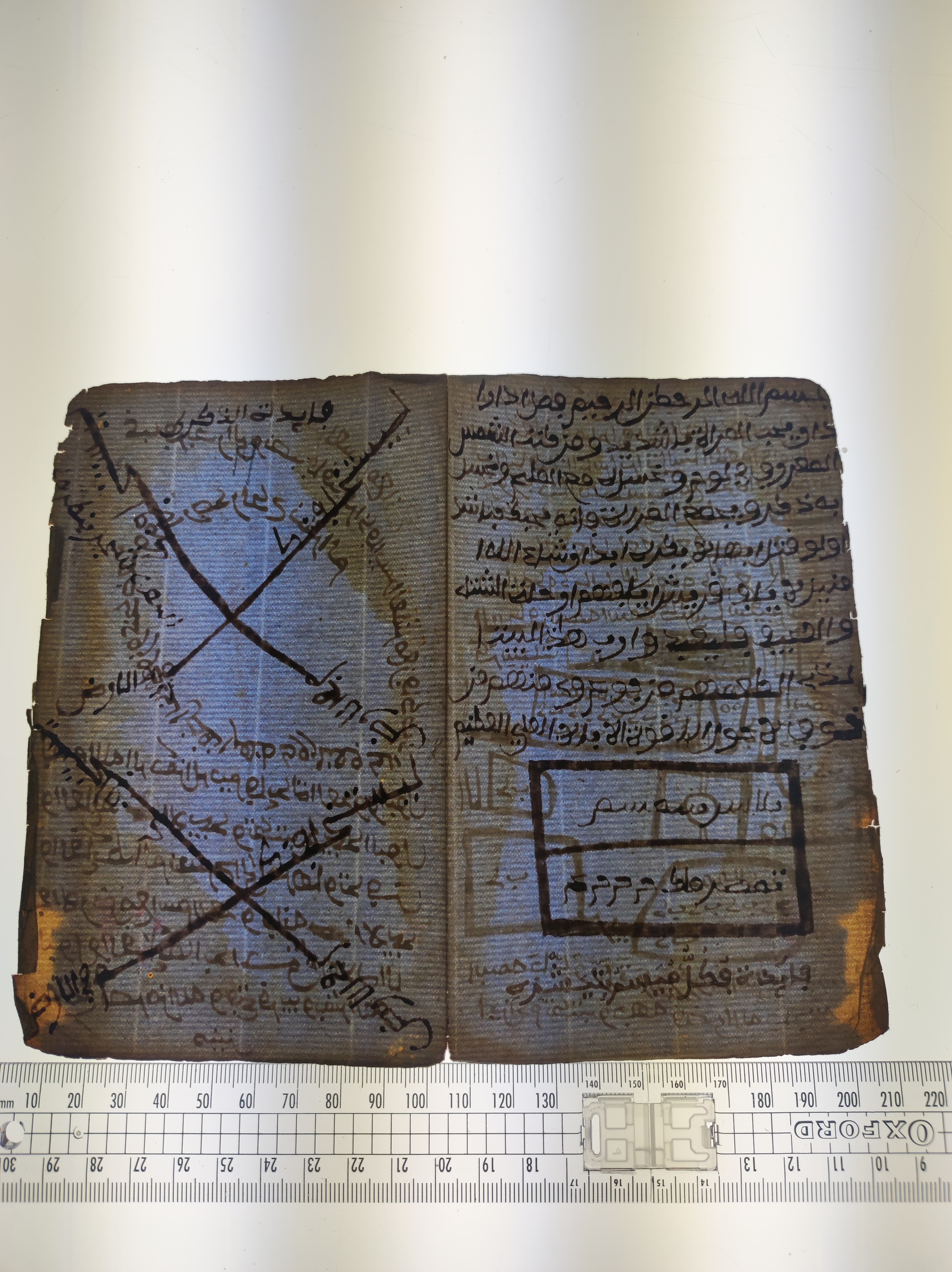
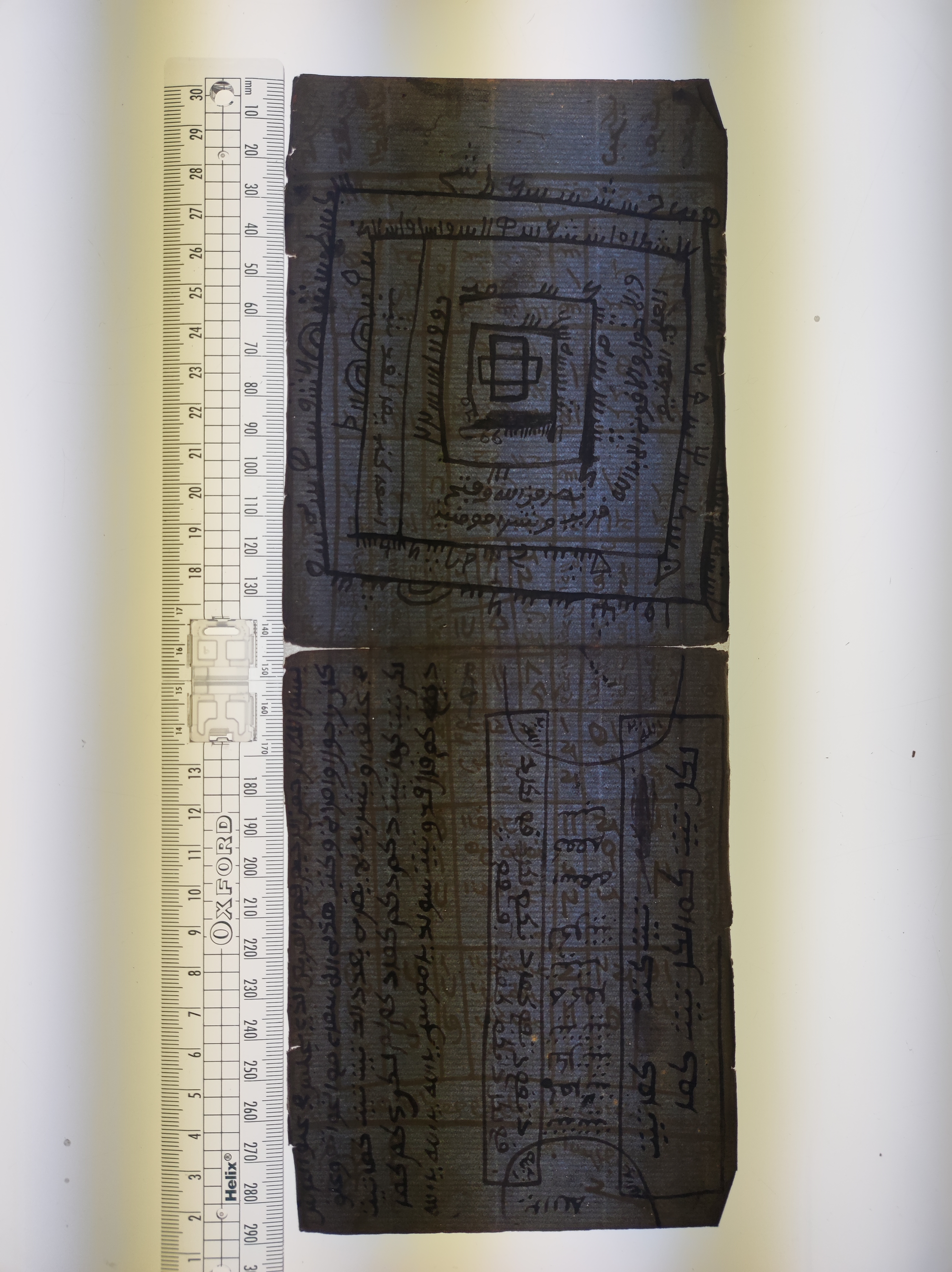
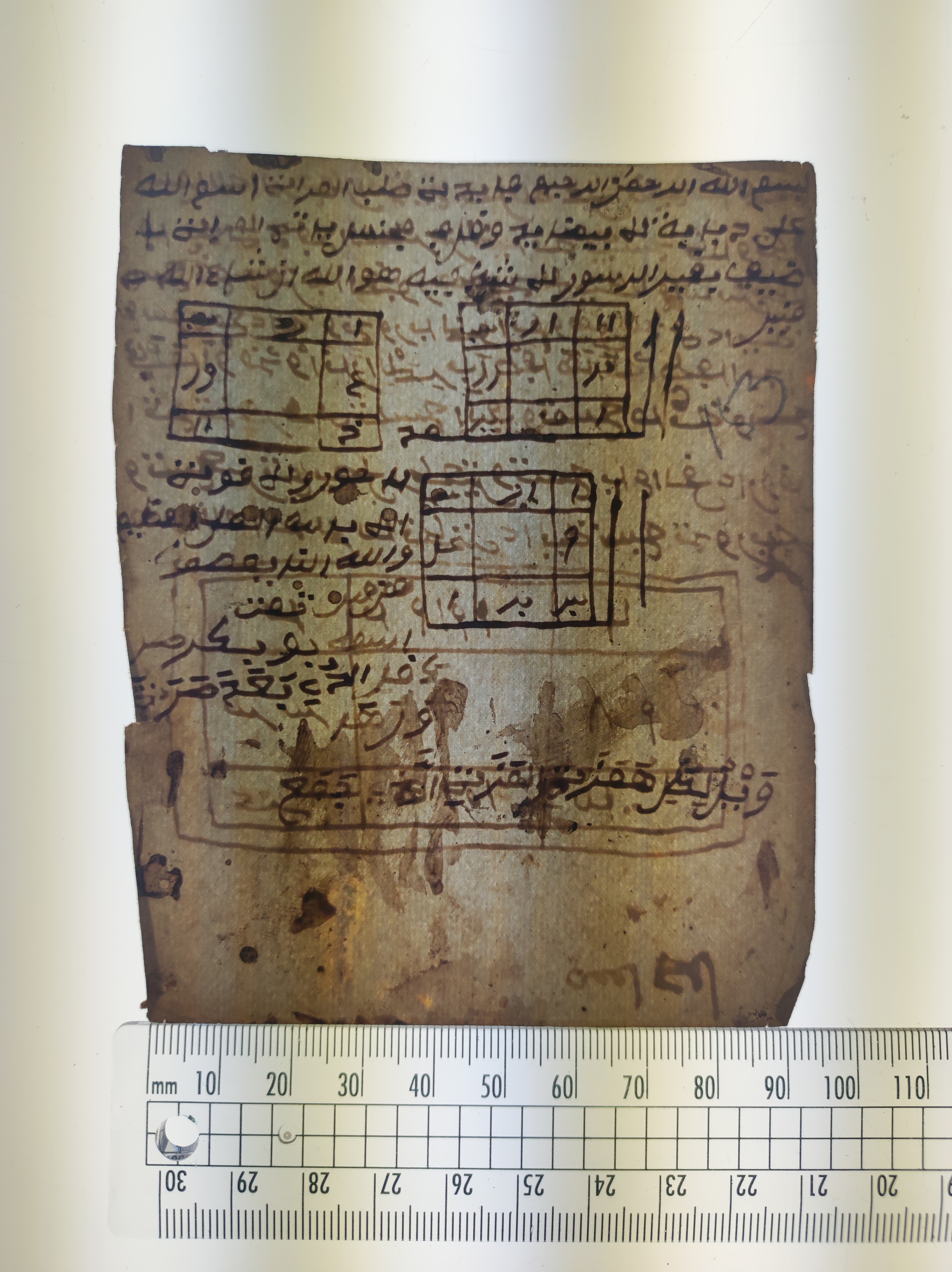
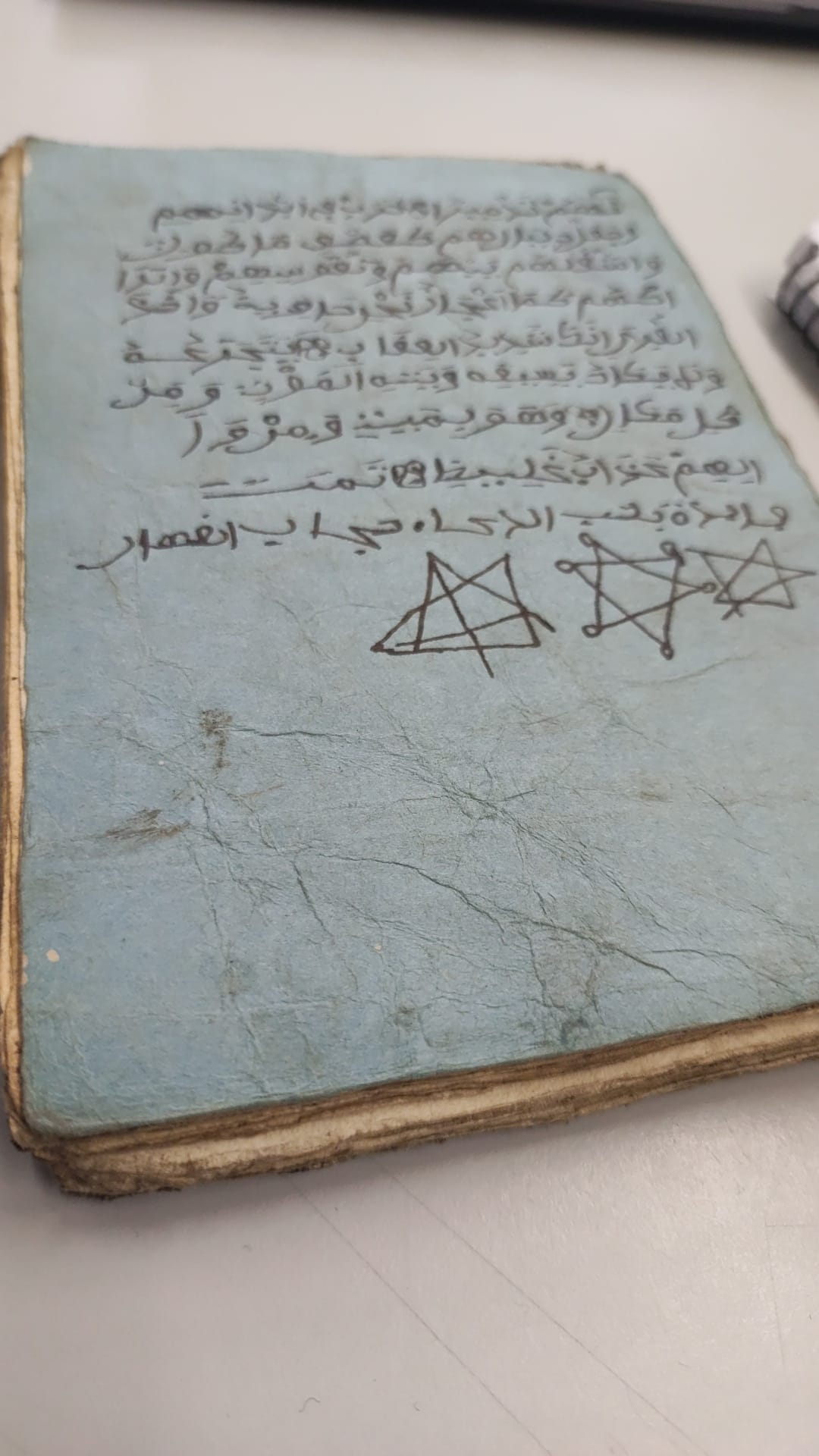
As is visible from the above photos, none of the blue paper in WMS Arabic 742 is of high quality, and none is a really bright blue. In at least one case (Fig. 5), it is possible that the paper has never been blue at all, but brown. The blue folios in the manuscript – especially fol. 19 (Fig. 3) – can be identified as the kind of blue paper frequently used for stationery in the United Kingdom.
So how do we come to find blue stationery in a West African manuscript concerned with traditional medicine? Processes of colonialism have already been alluded to above, but how exactly did blue paper find its way into West African manuscript culture? And what was its significance within West African manuscripts?
Before addressing the possible routes of British-produced blue paper into West Africa in the second part of this article, a word on paper supply in West African history is in order. It often comes as a surprise to scholars outside the field of West African studies that almost all of the paper in historic West African manuscripts is European in origin. Graziano Krätli, Ghislaine Lydon et al. (2011) have meticulously traced the extensive paper trade networks in their collective volume on the Trans-Saharan book trade. Furthermore, Michaelle Biddle (2015) has shown that by the nineteenth century, European – especially Italian – papermakers supplied various kinds of paper directly intended for the West African market. However, I suggest that the blue, ruled and pre-printed paper I found in the manuscript constitutes an altogether different kind of cultural influence or exchange, as it has been produced in Europe with the clear intention to supply colonial administrative communications and practices.
But why, out of all the available kinds of paper, was it this pale blueish stationery that became ever so popular in the British Empire and its colonies, to the point of spreading even to the regions’ indigenous writing cultures?
Unlike ruled or pre-printed paper, blue paper has a long history both in Islamic and European manuscript cultures. As with the westward spread of paper with its varieties and related technologies in general, blue paper was known in the Islamic world before it showed up in Europe. Wisso Weiß (1959) states that, anecdotally, blue paper may have been used for recording death sentences during the Mamluk Era (thirteenth–fourteenth centuries). In fact, the use of blue writing supports even predates the arrival of paper in the region – blue parchment was used in Islamic manuscript culture. Meanwhile, in Europe, locally-produced blue paper is first mentioned in Italian accounts in 1389, and it has spread through the continent from there. So is it, like so many other innovations – from algebra to marzipan – a technology borrowed from the Islamic world? On this matter, Weiß writes, ‘the early evidence for the production of and trade in blue paper justifies the hypothesis that the Europeans borrowed, together with the knowledge of making paper, also the knowledge of colouring [it], especially colouring [it] blue. However, the question remains as to why, given the several other colouring techniques known to the Arabs, only colouring in blue was accepted. Possibly, it is an invention that has been repeated in Europe.’ According to Adam Gacek (2009), red and orange papers were also used in Classical Islamic manuscripts, and also pink in North Africa – an example will be mentioned in the sequel to this article.
Before the onset of industrial production methods, blue paper could be produced through a number of techniques, discussed by Peter Bower in his informative article ‘Blues and Browns and Drabs’ (2002). Except for the production of blue paper from coloured rags, these techniques were relatively expensive due to the high cost of colourants. The reasons for the popularity of blue paper for writing are still relatively little researched and may originate in what we would call today ‘industrial espionage’. As Deena Goodman points out in a discussion of Dutch paper, ‘the distinctive bleuâtre [i.e. pale blueish hue] of true Dutch paper was [its] only trustworthy and recognizable mark’ (2006). Since Dutch paper was highly sought after during the eighteenth century due to its perceived quality, it was imitated by French papermakers, resulting in mass production of cheaper and more widely available blue stationery. This imitation paper nonetheless became popular, as its colour was still associated with the ‘luxurious’ Dutch paper.
Finally, in the mid-1800s, aniline dyes came into use, as explained by Joan Evans in her volume The Endless Web (1955), while demand for stationery paper grew. The production of blue stationery then took off in the United Kingdom, led by manufacturers such as John Dickinson & Co. Ltd. (in Hertfordshire) and Millington & Sons Ltd., paving the way for the mass-produced blue stationery we see in WMS Arabic 742. The trajectory of these products into West Africa and the wider empire will be described in the second part of this article.
In this part of ‘Britannia in Blue’, I have presented a number of blue folios found in a West African manuscript housed at the Wellcome Collection, London, and I discussed the history of blue paper in Europe and the Islamic world, as well as the importance of European paper for West African manuscript cultures in general. In the upcoming second part, we will try to identify the folios’ manufacturers via their watermarks, take a short look at the folios’ contents, and conclude our expedition into the phenomenon of blue paper in West African manuscript cultures by speculating about its cultural significance.
References
Biddle, Michaelle (2015), ‘Arbib, Ydlibi and Suru (Hakuri): three Arabic Script Watermarks in Northern Nigerian Manuscripts (end 19th–beginning 20th century)’, in Regourd, Anne (ed.), The Trade in Papers Marked with Non-Latin Characters/Le commerce des papiers à marques à caractères non-latins, Leiden: Brill, 11-33.
Blair, Sheila S. (2000), ‘Color and Gold: The Decorated Papers used in Manuscripts in Later Islamic Times’, Muqarnas, 17, 24-36.
Bloom, Jonathan M. (2015), ‘The Blue Koran Revisited’, Journal of Islamic Manuscripts, 6:2-3, 196-218.
Bongianino, Umberto & Éléonore Cellard (2025), ‘The Pink Qur’an: A Reverse Bibliography’. Journal of Islamic Art and Architecture, 1: 1-2, 83-142.
Bower, Peter (2002), ‘Blues and Browns and Drabs: The Evolution of Colored Paper’, in Stratis, Harriet K. & Britt Salvesen (eds.), The Broad Spectrum: Studies in the Materials, Techniques and Conservation of Color on Paper, London: Archetype, 42-48.
Brückle, Irene (1993), ‘The Historical Manufacture of Blue-Coloured Paper’, The Paper Conservator, 17:1, 20-31.
Burns, Thea (2025), Blue Paper. The Overlooked History of a Drawing, Printing and Writing Material. 1400-1600. London: Archetype.
Coleman, Donald C. (1958), The British Paper Industry: 1495–1860. A Study in Industrial Growth. Oxford: Oxford University Press.
Evans, Joan (1955), The Endless Web. John Dickinson & Co. Ltd. 1804–1954, London: Jonathan Cape.
Gacek, Adam (2009), Arabic Manuscripts. A Vademecum for Readers. Leiden: Brill.
Goodman, Deena (2006), ‘Why is Writing Paper Blue? Colour and Fashion in Eighteenth Century Writing Paper’, in Corcy, Marie-Sophie et al. (eds.), Les archives de l’invention. Écrits, objet et images de l’activité inventive. Toulouse: CNRS–Université de Toulouse-Le Mirail, 537-546.
Kostelnik, Jannis (2026), ‘Recycled Paper in a West African Composite Manuscript from the Wellcome Collection (WMS Arabic 742)’, Zeitschrift der Deutschen Morgenländischen Gesellschaft, 176:1, 15-36.
Krätli, Graziano & Ghislaine Lydon (eds.) (2011), The Trans-Saharan Book Trade. Manuscript Culture, Arabic Literacy and Intellectual History in Muslim Africa, Leiden: Brill.
Ogorodnikova, Darya (2023), Soninke Ajami Manuscripts and Islamic Education. A Reconstruction of Scribal Practices, PhD Thesis, University of Hamburg.
Ogorodnikova, Darya & Khaoula Trad (2025), ‘Palimpsesting or Paper Reuse in Islamic Manuscripts of Islamic West Africa’, in Gippert, Jost et al. (eds.), Palimpsests and Related Phenomena across Languages and Cultures. Berlin: De Gruyter, 475-508.
Weiß, Wisso (1959), ‘Blaues Papier zu Druckzwecken’, Gutenberg-Jahrbuch 1959, 26-35.
Biography
Jannis Kostelnik is a doctoral candidate and former research associate at the Centre for the Study of Manuscript Cultures at the University of Hamburg. His doctoral project, ‘Prayer, Protection, and Plant Medicine: West African Composite Manuscripts from the Wellcome Collection’, focuses on a corpus of late nineteenth-century medical-esoteric manuscripts from different areas within the region, housed today in the Wellcome Collection in London. He has also published on similar manuscripts in the Timbuktu libraries, as well as on West African scripts. Since mid-2026, he holds a position in research management at the University of Göttingen.
jannis.kostelnik@uni-hamburg.de
 The Book & Paper Gathering