By Jiwon Jeong
There’s a saying in Korea that a true artisan does not blame their tools. I’m not quite there yet; I’m always on the lookout for tools that make life easier and improve my treatments.
My favourite (and most-used) tool is a spatula made from yak horn. It’s incredibly thin and flexible, yet strong. I use it for everything: lifting wet or humidified paper, separating adhered sheets, and releasing paper from Bondina after pressing. So far, it’s the most reliable tool I’ve found for this kind of work.
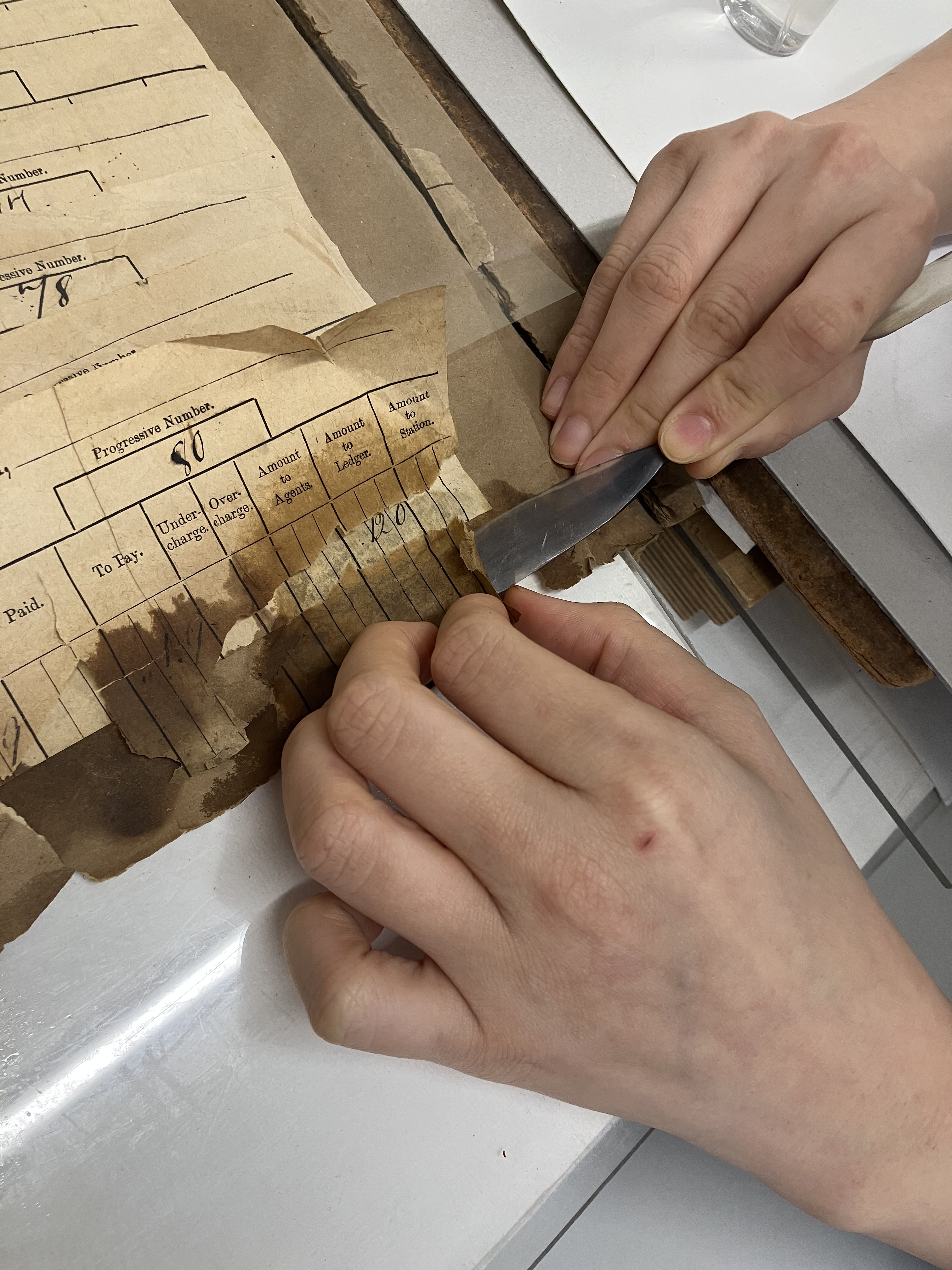
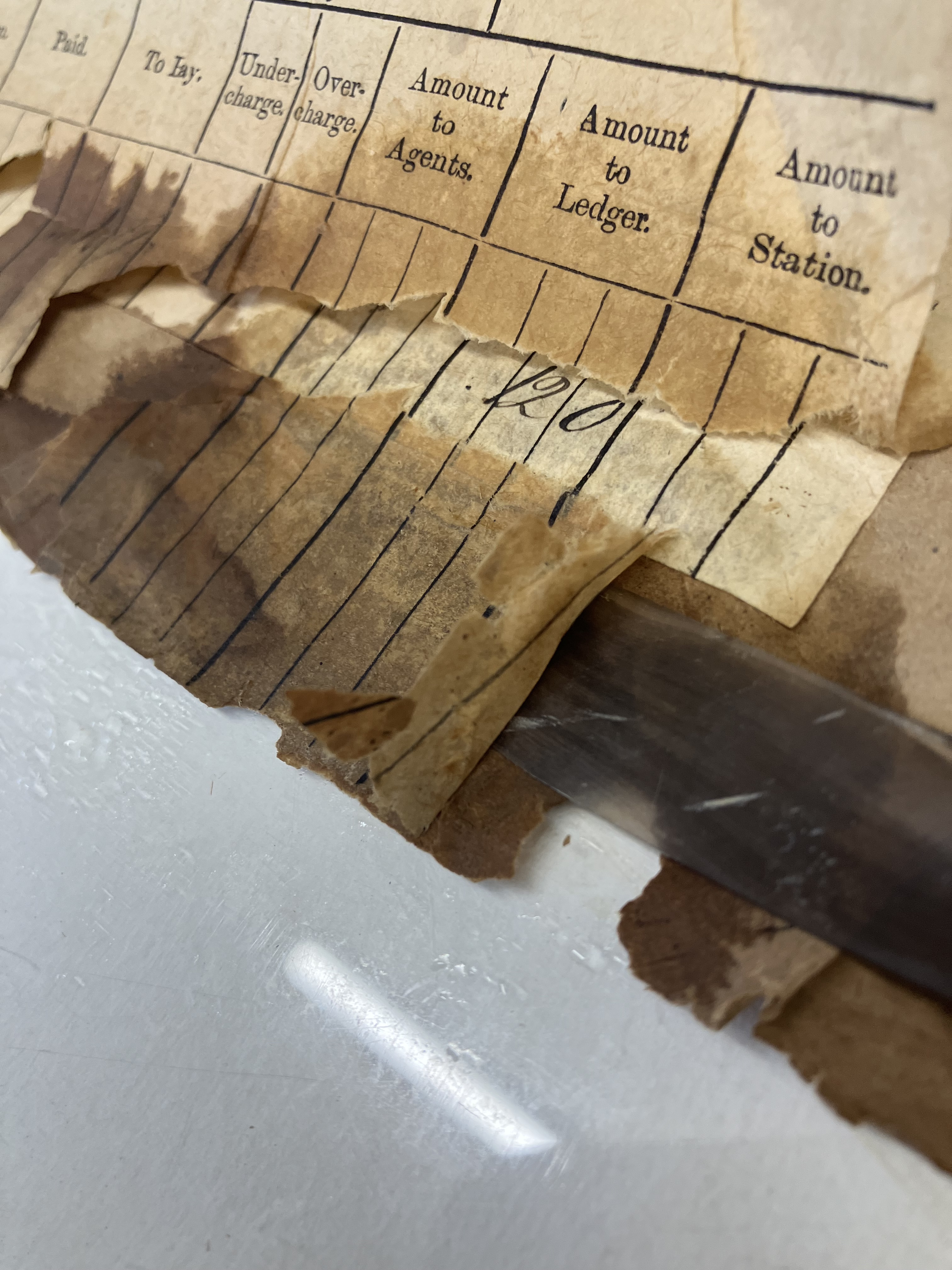
Using a yak horn spatula to lift a fragile sheet during treatment. Images by Jiwon Jeong.
As many conservators will know, it’s all too easy to puncture or tear thin paper, especially when it’s wet or stuck. I do have a bamboo spatula, traditionally used in East Asian mounting studios, which works well for lifting pasted Asian papers. However, it’s too thick and blunt for more delicate tasks, and not much use for separating more firmly adhered layers. Bamboo can only be thinned so far before it starts to split. For a long time, I relied on Casselli spatulas, but their thin metal edges occasionally damage the paper – every conservator’s nightmare.
The idea came, like an epiphany, at a Christmas market, in front of a stall selling Viking drinking horns. It struck me that horn or antler could be shaped into thin, flexible spatulas with edges soft enough not to damage paper. The challenge, of course, was finding someone who could make them.
For some time I had been following a toolmaker from Korea on social media, @ddan_jung. He shared photos not only of the knives and leatherworking tools he made, but also of numerous stray cats that he and his wife cared for. On a whim, I asked whether he might be able to make me a horn spatula – and perhaps some paring knives to go with it.
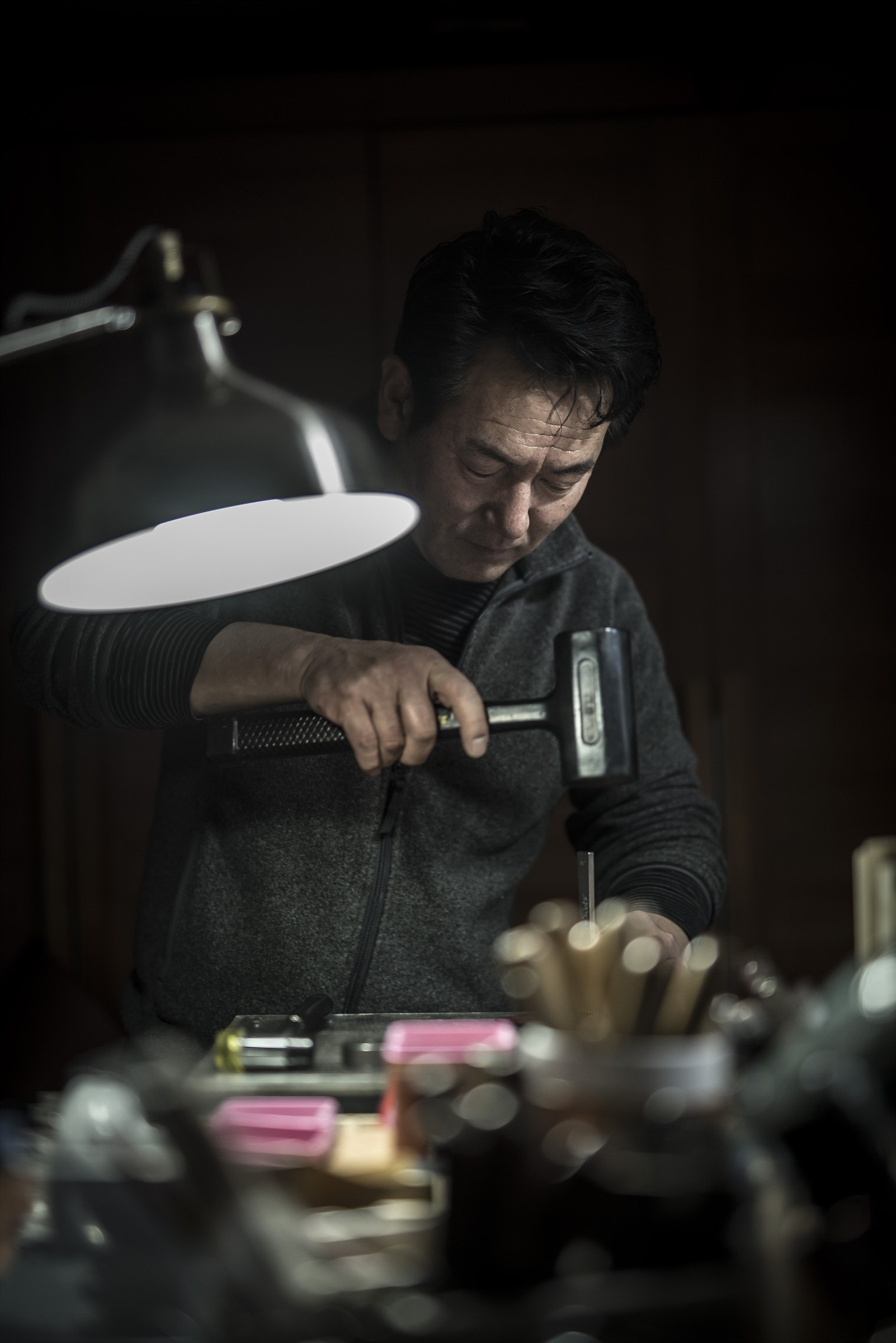
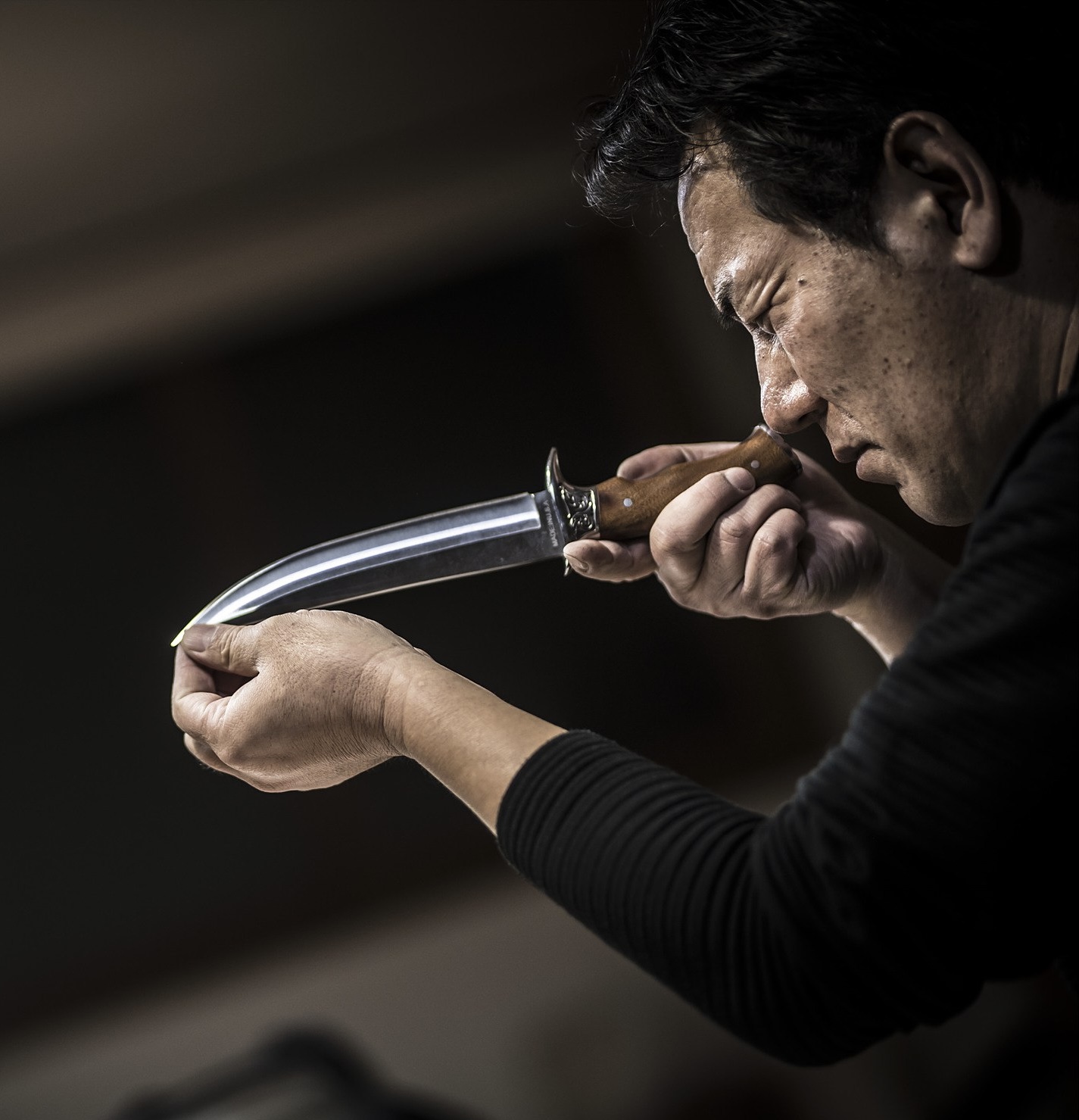
Mr Nam in the process of making tools. Images by Hyunjeong Kim.
Mr Nam and his wife currently care for eight stray cats that live around their home, as well as two rescue cats and a dog that live indoors. In Korea, cats and dogs have traditionally been kept semi-feral, and with low rates of neutering, there are now large numbers of stray cats, particularly in the countryside where Mr Nam and Mrs Nam live.
Not long ago, an outbreak of feline panleukopenia affected the cats in their care. Several needed veterinary treatment, and some were rehomed because they were no longer able to survive outdoors. The costs were significant, so Mr Nam began offering bespoke tools at reduced prices to help cover them.
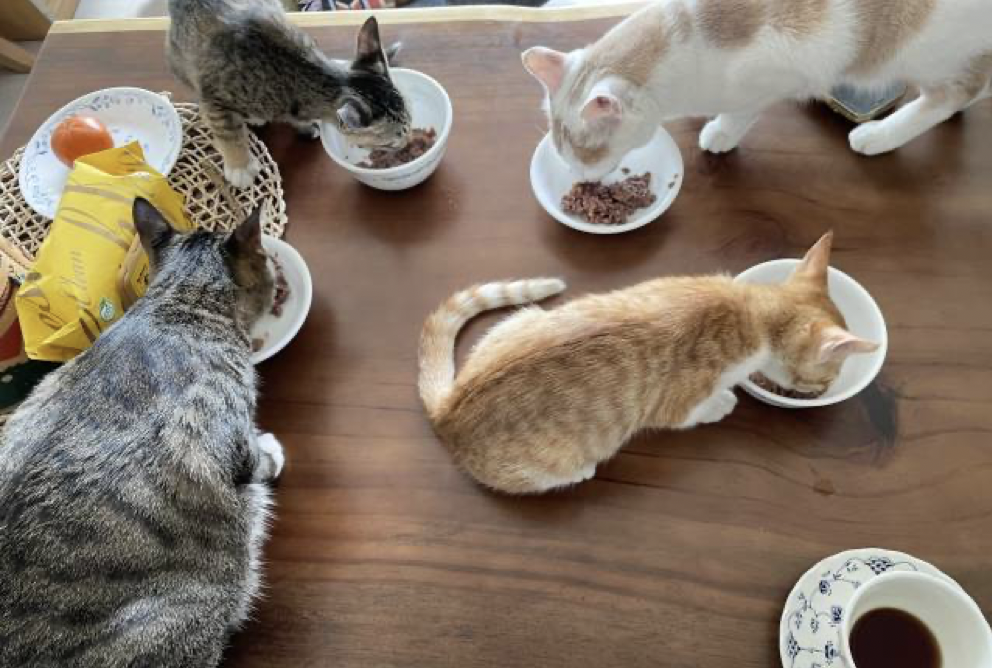
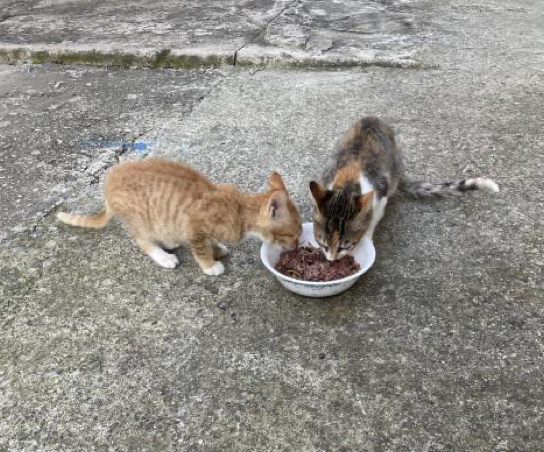
Cats cared for by Mr and Mrs Nam. Images by Hosung Nam.
Mr Nam agreed to try making a few conservation tools. From there, we began experimenting, trying a variety of materials. For spatulas, yak horn proved more flexible and resilient than buffalo horn. We also tried different steels for lifting and paring knives. Japanese Damascus steel holds an excellent edge and is beautiful to look at, making it ideal for knives, but it is not suitable for spatulas as it can’t be made thin enough. We also explored different woods, looking for something comparable to boxwood for making plioirs en buis.
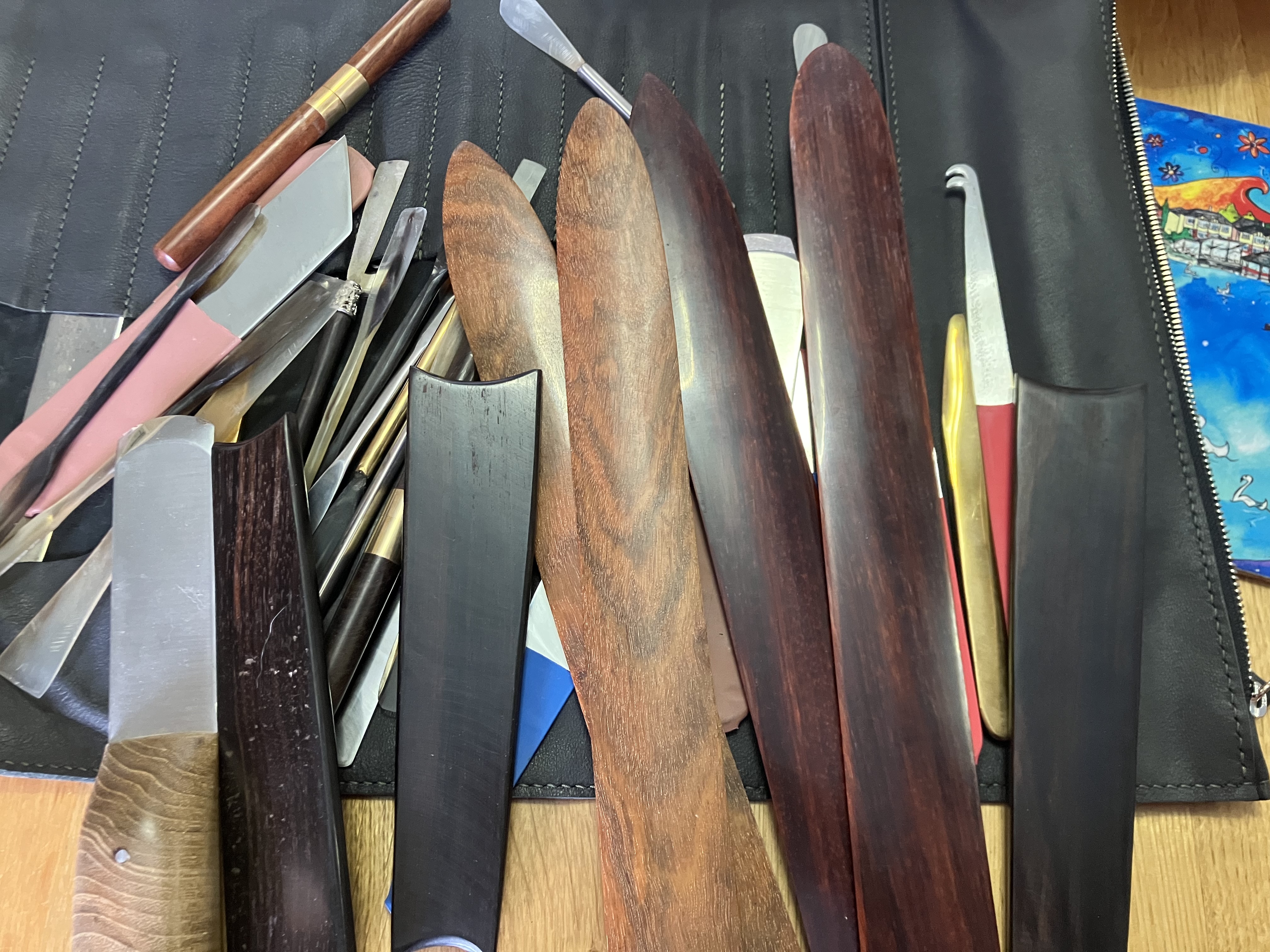
When the first set of tools arrived from Korea, my colleagues were immediately impressed. Conservators Lydia Stirling and Mike Hodgson at Glamorgan Archives and Mark Allen at North East Wales Archives soon placed their own orders. Their feedback led to further refinements and new designs, including a brass folder. Unlike bone folders, it doesn’t chip, and its weight makes it particularly effective for creasing boxboard – something our older volunteers with less grip strength have really appreciated.
Unsurprisingly, others began asking where they could get tools like these. As Mr Nam doesn’t speak English, I found myself translating messages and arranging payments for other conservators, which quickly became unsustainable as orders piled up. At the same time, it became clear that Mr Nam and Mrs Nam needed a more reliable source of income to support the cats in their care.
I approached Conservation by Design to see if they might be interested in stocking the new tools. It felt like a natural solution – making the tools accessible to more conservators while providing a steadier income for Mr Nam. A selection of the tools will be added to their online catalogue in the near future (likely in early 2027).
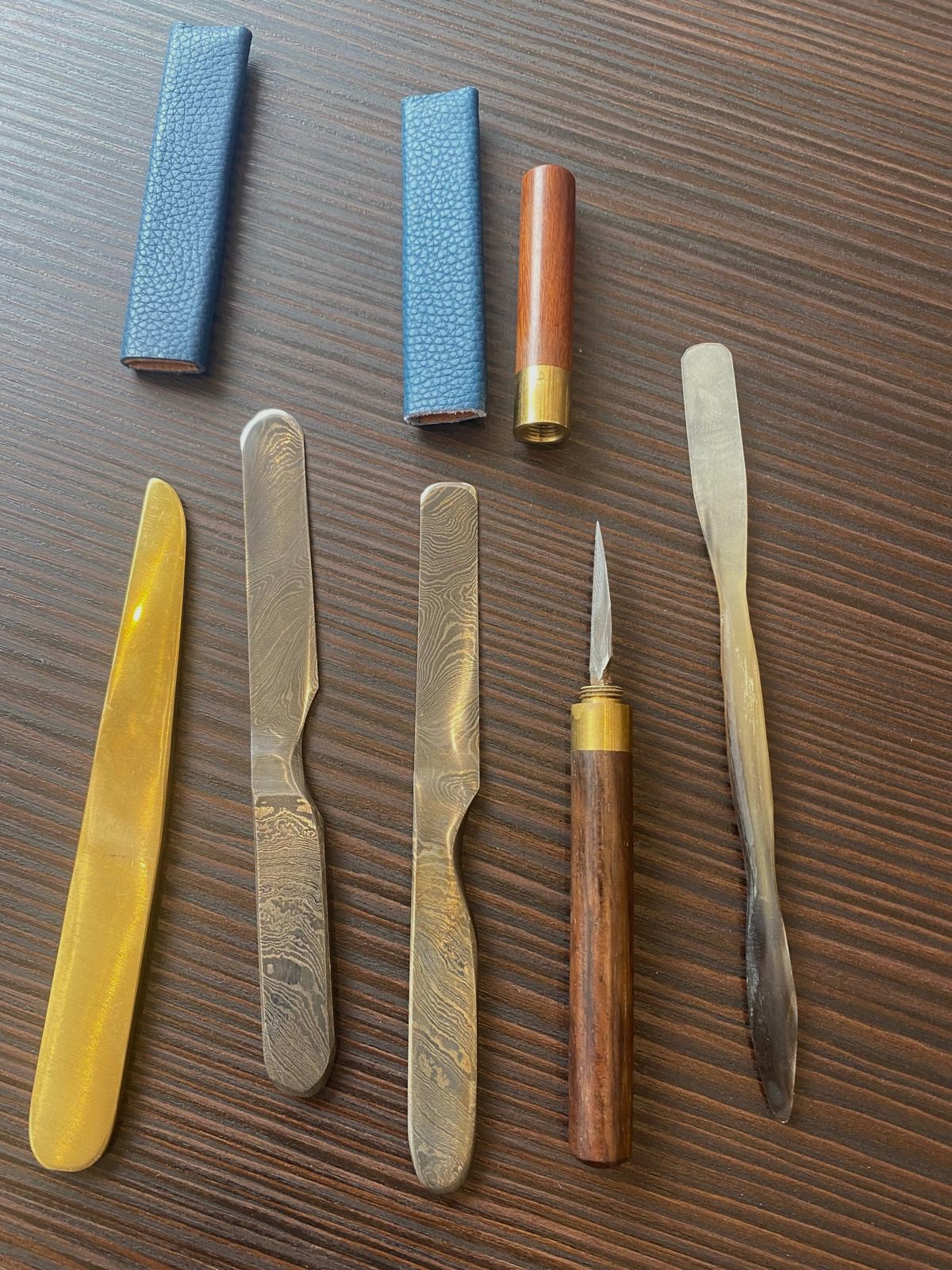
I still use these tools every day. They’ve made my work easier and better, but they’re also simply lovely to use. In a profession that can feel repetitive, a well-made, thoughtfully designed tool makes a difference. And if you buy one for yourself, you’re not just investing in a useful tool – you’re also helping support the care of stray cats, which is what led to this collaboration in the first place. In a way, the search for a practical solution to a conservation problem has become something much more: a network of people, materials and relationships, connected through these special objects.
Jiwon Jeong is a book and paper conservator at North East Wales Archives. She is currently working on the Glyn Valley Tramway Waybill Book under the supervision of Mark Allen as part of the NMCT grant.

