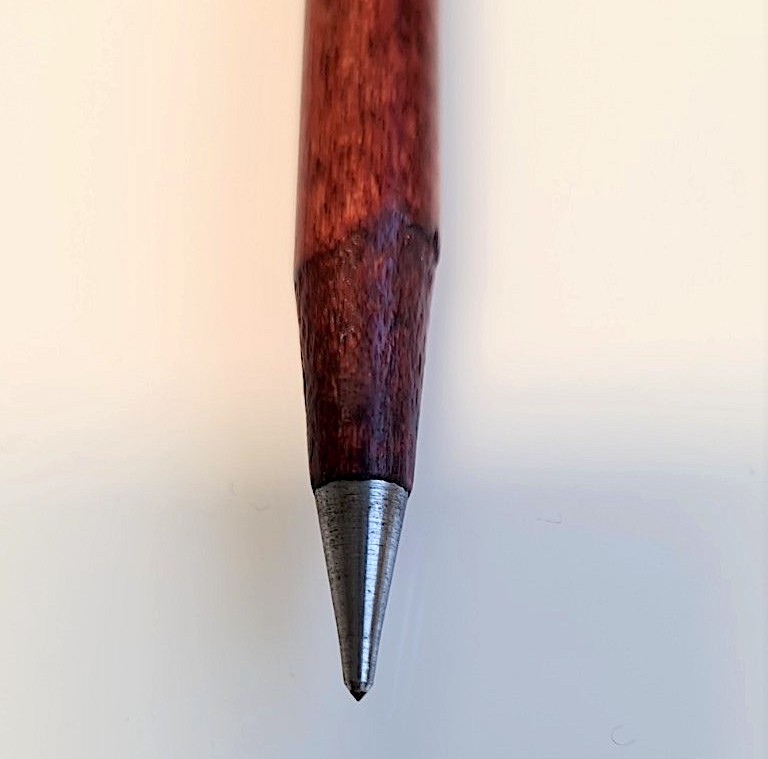
As a total ‘tool magpie’, I can’t easily choose a favourite tool. There are so many! The pointy tweezers and favourite bone folders and hefty squares and little straightedges… But the diamond-tipped engraving tool is what I use most for paper repair. This tool isn’t really my recommendation, as it was recommended to me by a friend, who had it recommended to her, but so it goes with good things.
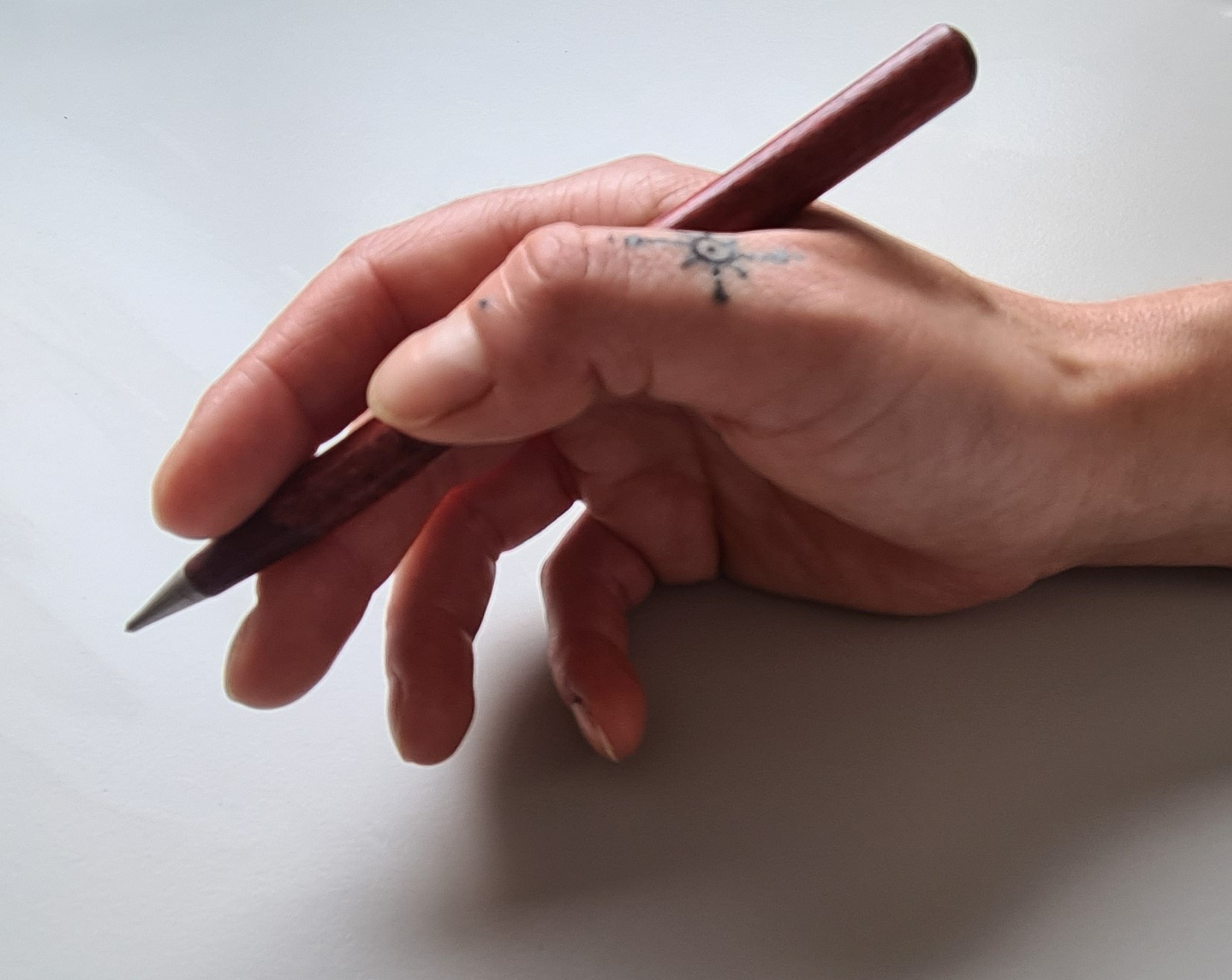
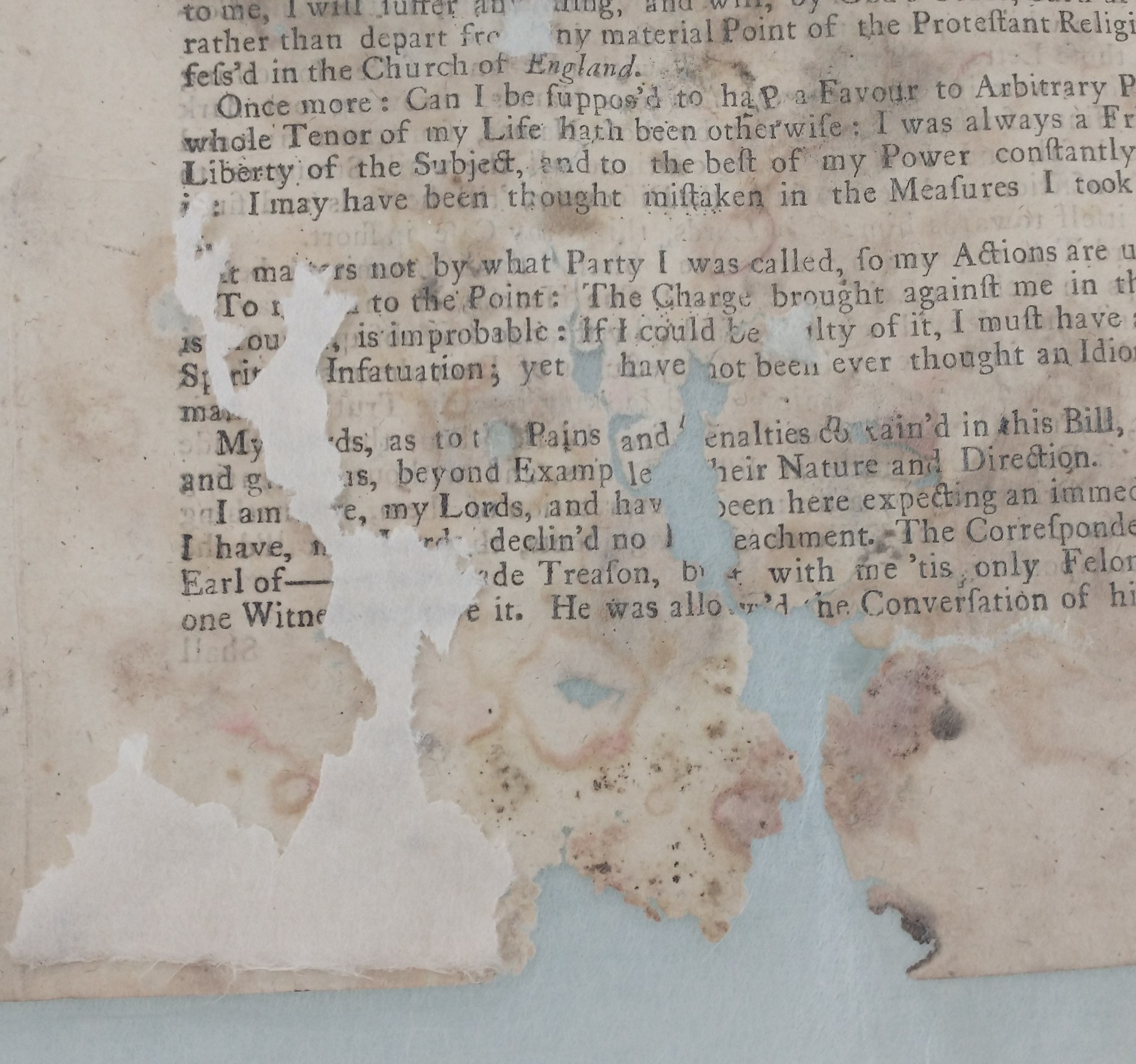
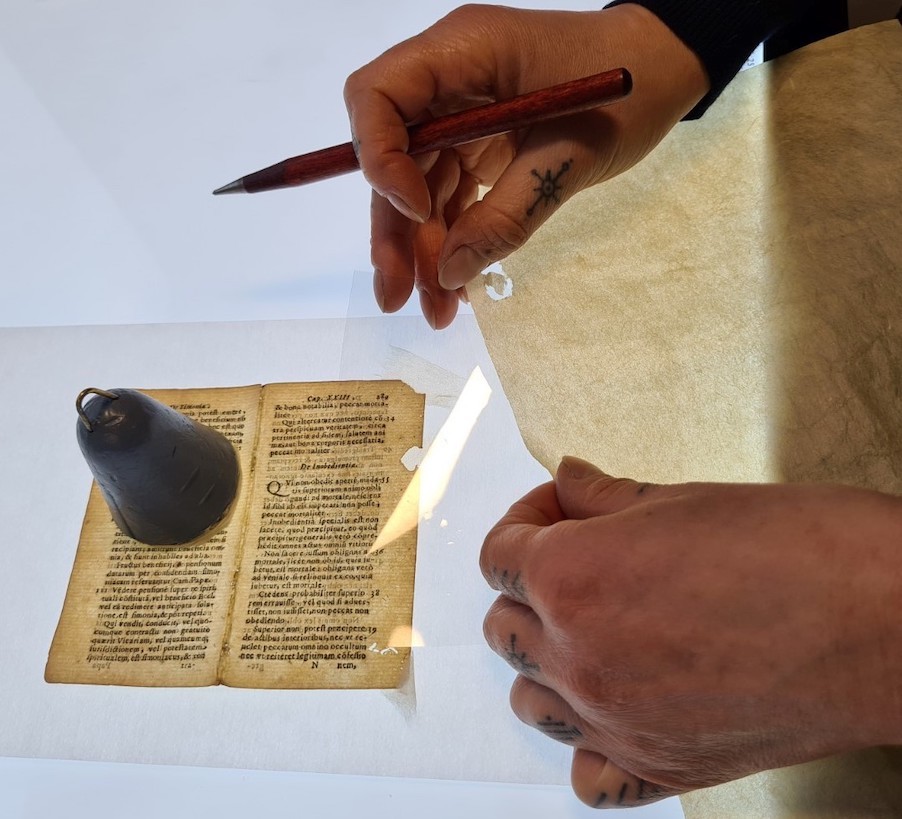
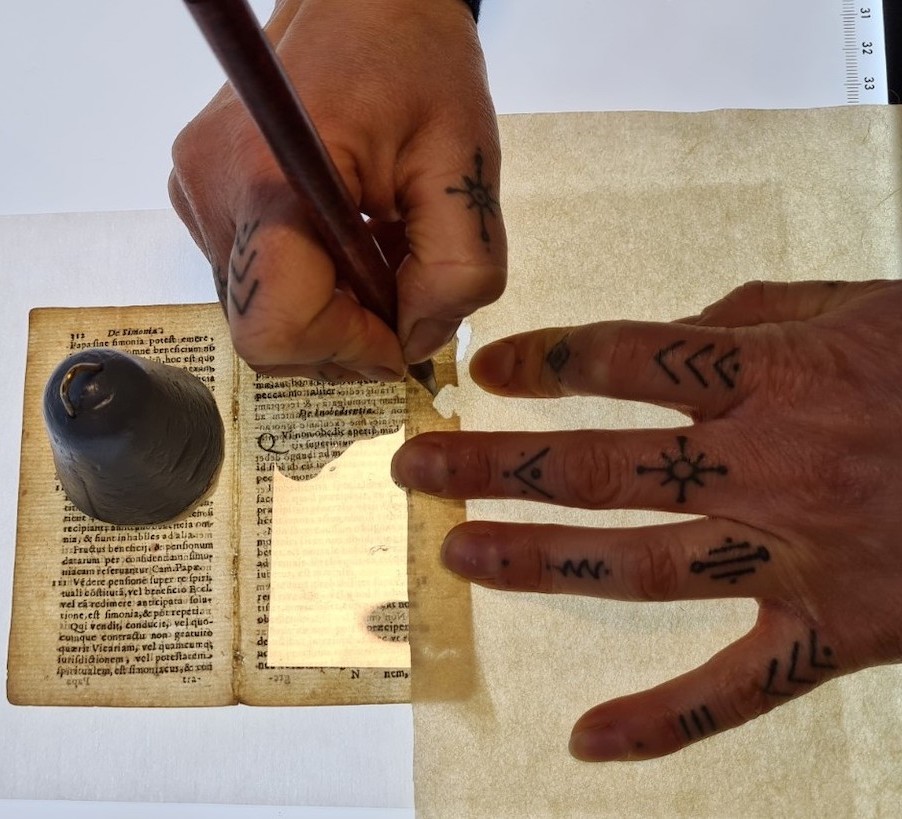
Despite being predominantly a book conservator, I spend most of my time cleaning and repairing paper. As this tool is like a pen, it is easy to hold, moves fluidly around curves and creates intricate shapes with ease. Along with a lightbox or light sheet, this tool makes near-perfect infills. I use it to shape thin tissues for backing losses and supporting tears, and for shaping infills made from heavier tissues. Therefore, it works for nearly all weights of Japanese tissue. If needed, it can also be used like a needle to pick out a small curve or corner.
To use this tool, I place the paper to be infilled on a light sheet; then I place Melinex over the loss and hold the repair tissue in place. With the aid of light from behind, a lovely fill with neatly feathered edges is created. Depending on the tissue used, these may need to be trimmed back a bit. The result is quick and highly satisfying, as very complex shapes are easily created and slot beautifully into place.

Talitha Wachtelborn is a book and paper conservator at Lambeth Palace Library. She is currently working on the Sion College Collection of books from 1450–1850. Additionally, she is the chair of the London and South Region of the Society of Bookbinders and co-organiser of their International Bookbinding Competition.
 The Book & Paper Gathering
In use, does Talitha’s diamond-tip tool scribe (cut) the paper fibres, or does it tease out the ends of the fibres? In the first case, I imagine the infill could simply be lifted up from its sheet; the other way, one would need to gently pull the waste away from the infill. (Not sure I’ve explained this very well!)
LikeLike
Hi Dana, apologies for the delay in responding to your question. When used on Japanese papers, the tool cuts some fibres as the shape of the infill is incised. However, some fibres are still left which may be longer than desired. These can be trimmed back. It functions as a happy medium between cutting and needling and is quicker to use. The reminder of the sheet would need to be pulled away. This is generally very easy but would depend on the individual nature of the paper being used. If used on Western papers, the tool would usually ‘cut’ through but leave a slightly ragged edge. The remaining fibres do not usually need to be trimmed back.
LikeLike
Do you have a US (or other) source for these?
Many thanks
LikeLike
Dear Maureen, apologies for the delay in responding to your question. I’ve had a look and Artist and Craftsman Supply offer a tool that looks similar at https://artistcraftsman.com/ec-lyons-diamond-point-etching-needle/ . There may be other suppliers. I can’t guarantee that this is the same tool as I have never ordered from this company. If this is not available, then I would suggest finding a printmaking supplier and ask for a diamond tipped dry-point etching scribe.
LikeLike