By Alison Faden, Conservator, Bedfordshire Archives, 2025
The Bedfordshire Times newspaper glass plate negative archive consists of a quarter of a million glass negatives (mainly quarter plate, 5” x 4” or 90 x 120 mm). The earliest items in this gem of a collection are from 1905; the bulk of the images cover 1941–1969. After that, the local press photographers switched to rolls of plastic film.
Though historically the collection came to be known as the Bedfordshire Times collection, it really covers six local newspapers, all run by the Bedfordshire Press: the Bedfordshire Times, Bedford Record, the North Beds Courier, the Ampthill News, the Wolverton Express and the Woburn Reporter. Their photographers travelled all over Bedfordshire to cover local events, farming news, war, industry, building, weddings, elections, dignitary visits, and the County Show. The collection is a rich vein of high-quality dated and labelled images capturing early- and mid-twentieth-century Bedfordshire.
In 1969 the Bedfordshire Press moved from their Bedford town centre offices to more spacious accommodation on the edge of town. They decided at that point to dispose of their glass plate negatives. Bedfordshire Archives stepped in and rescued the 250,000 images. (There is a rumour that some of the glass negatives were retrieved from a skip!)
Bedfordshire Archives began a project to catalogue the collection in 2021. Most of the collection is in very good condition; the negatives are numbered and listed in their original index volumes, wrapped in their original labelled and dated glassine sleeves. They have been stored in the original glass negative boxes, with 10–15 negatives per box. The boxes have always been stored on their sides to minimise downward pressure on the glass.
However, the Cataloguing team ran into two challenges which required conservation input:
● Cracked negatives: how to store them safely, preferably in sequence?
● Fused negatives due to historic water damage: how to separate them?
This article describes two processes: a treatment plan to provide a quick temporary storage fix for cracked glass negatives, and the experimentation in search of a safe method to separate fused glass negatives.
While doing background research, I was very grateful to find Ioannis Vasallos’s illuminating article ‘Picking Up the (Broken) Pieces’, posted 27th October 2022 in The Book and Paper Gathering. I highly recommend his article to any conservator embarking on a similar project. The bibliography included with the article was also very useful. I hope to contribute to this discussion.
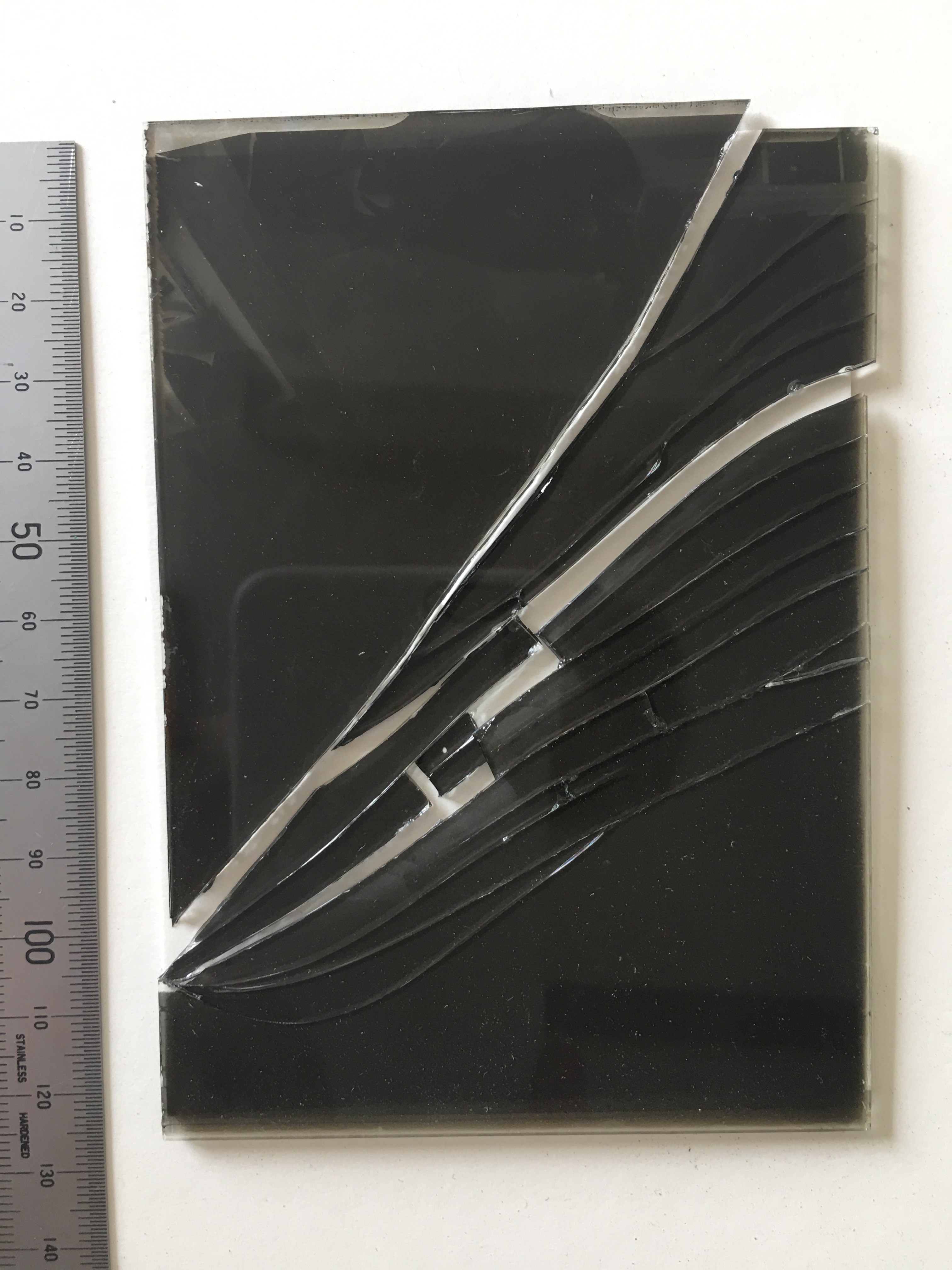
Problem 1. Storing cracked glass negatives
As always, the project had special requirements:
● There was very little space to expand the collection. The Cataloguing team were keeping the original numbering sequence and original box housing. The best-case scenario would have been to put the treated glass plates back into their original places in the sequence. But broken glass pieces tend to dislodge and slide beneath one another, creating a potential fulcrum for new cracking. Storing broken negatives with unbroken ones therefore creates a risk of new damage, not to mention the obvious health and safety issues.
● Due to the sheer numbers, Conservation needed to work in tandem with Cataloguing. We therefore required a quick, safe, reversible temporary storage solution that could be upgraded to a more interventive solution in the future if appropriate.
● Importantly, the image needed to remain visible through any temporary repair.
The stabilising treatment
I cut stiff paper into pieces the same size as the glass plate negatives (120 x 90 mm) to use as supports. With the broken negative on the paper, emulsion side down, I used tweezers to set the loose pieces into place, like in a jigsaw puzzle.
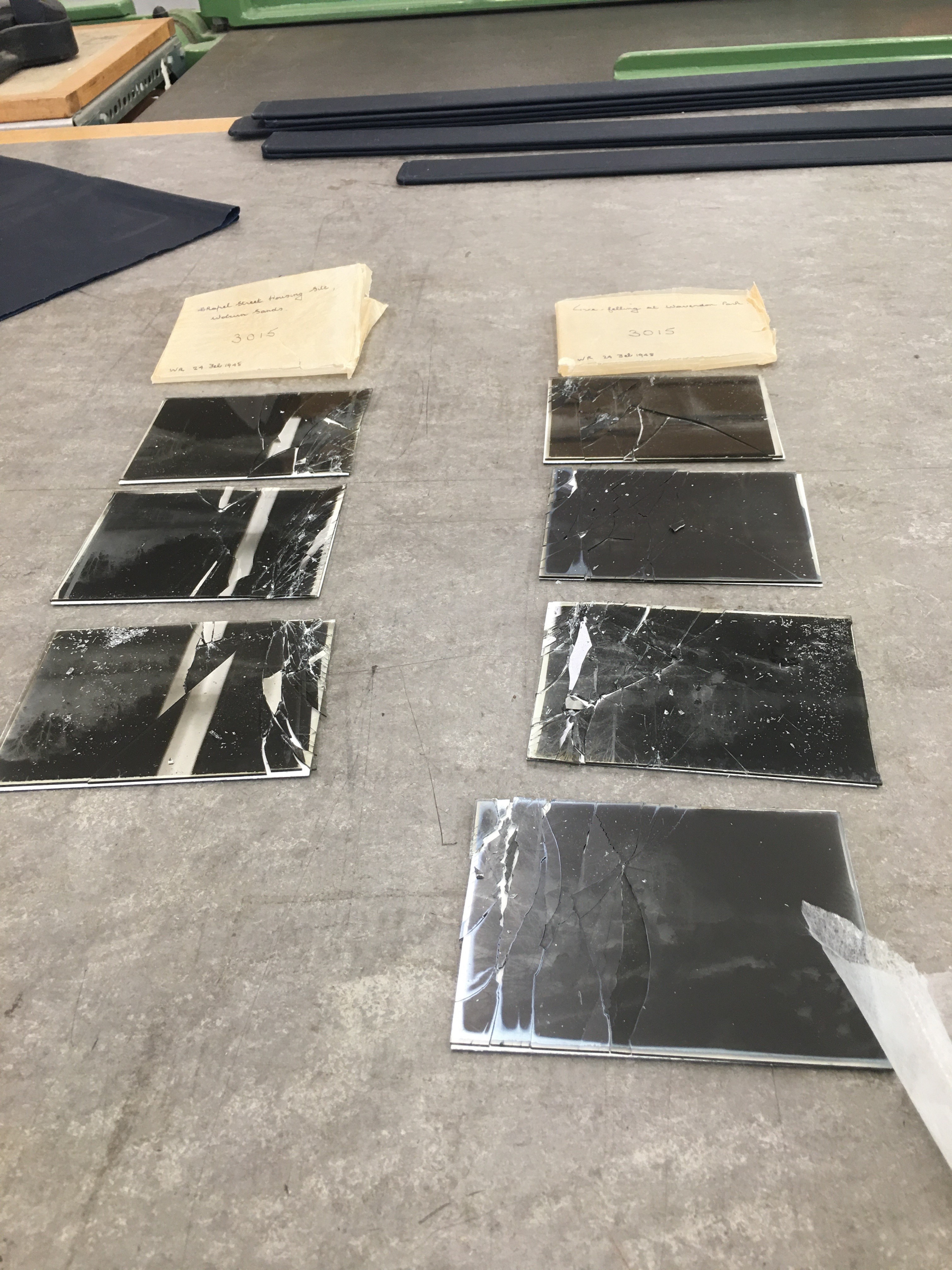
I made some 5 gsm kozo/wheat starch paste remoistenable tissue, cut to the size of the negatives. Placing it over the glass side of the broken plate, I reactivated the adhesive with a barely damp cotton swab. This was a temporary measure to hold the glass pieces in place until more permanent adhesion can be carried out. Though faintly veiled, the image is still visible through the 5 gsm kozo.
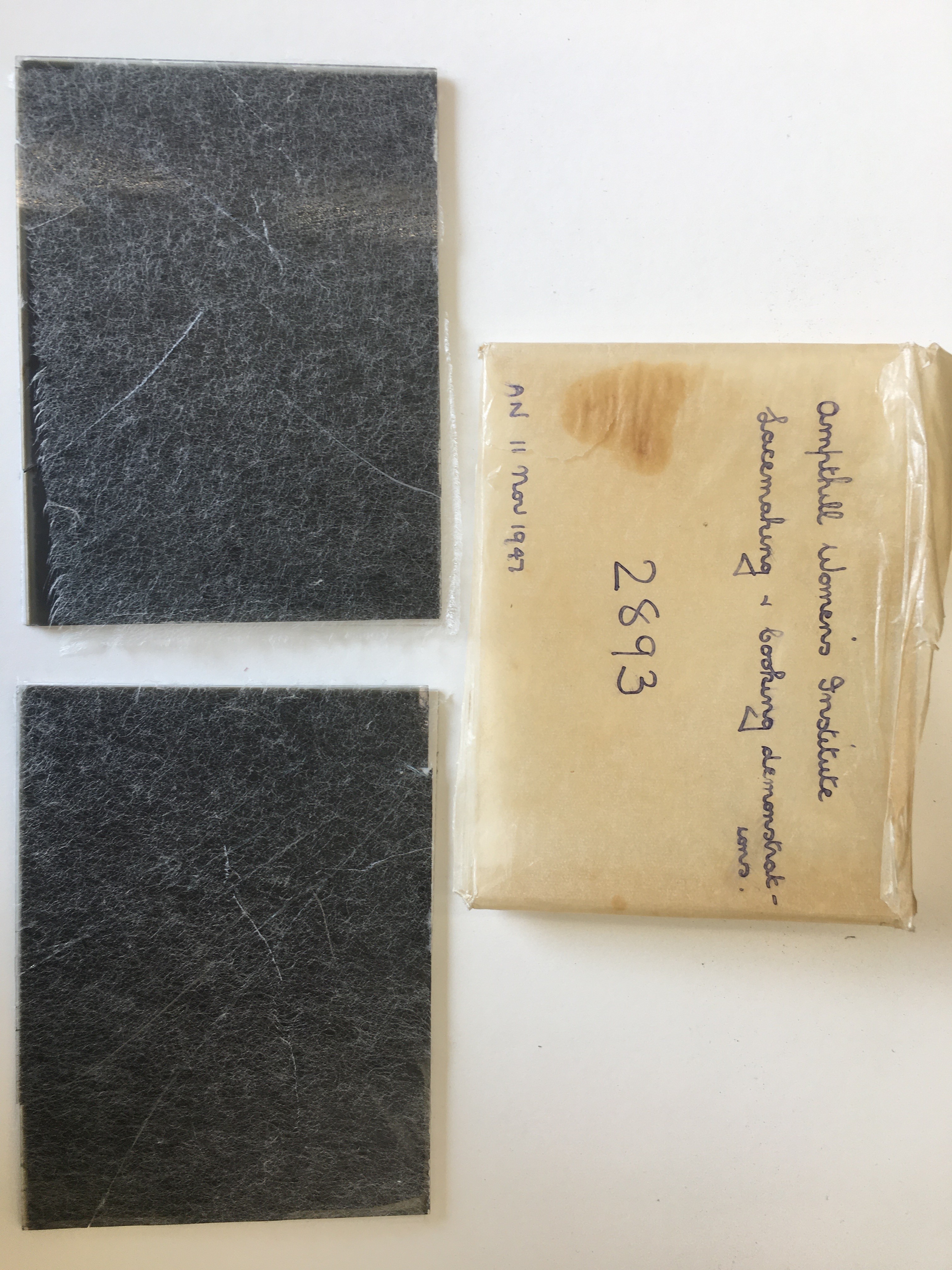
The consolidated glass negatives were then sandwiched between pieces of stiff paper and wrapped in a Silversafe® four-flap enclosure. A handling warning was written on the wrapper.
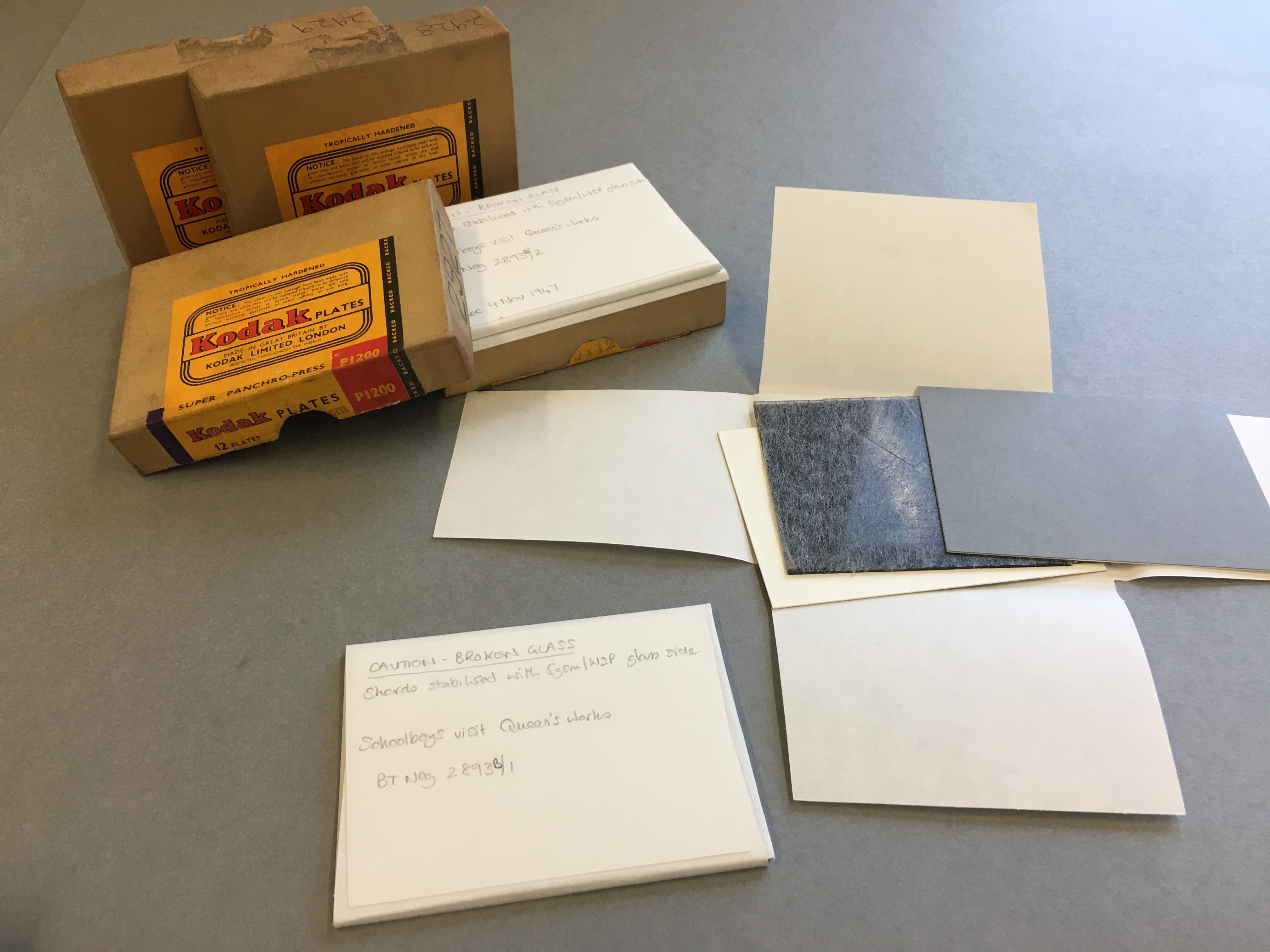
Problem 2. Separating fused glass negatives
Some negatives had suffered water damage at an unknown point in the past, which caused them to stick together. They came to Bedfordshire Archives in this state. The photographs were taken in 1948 and 1949, so they may have been stuck together for over 50 years.
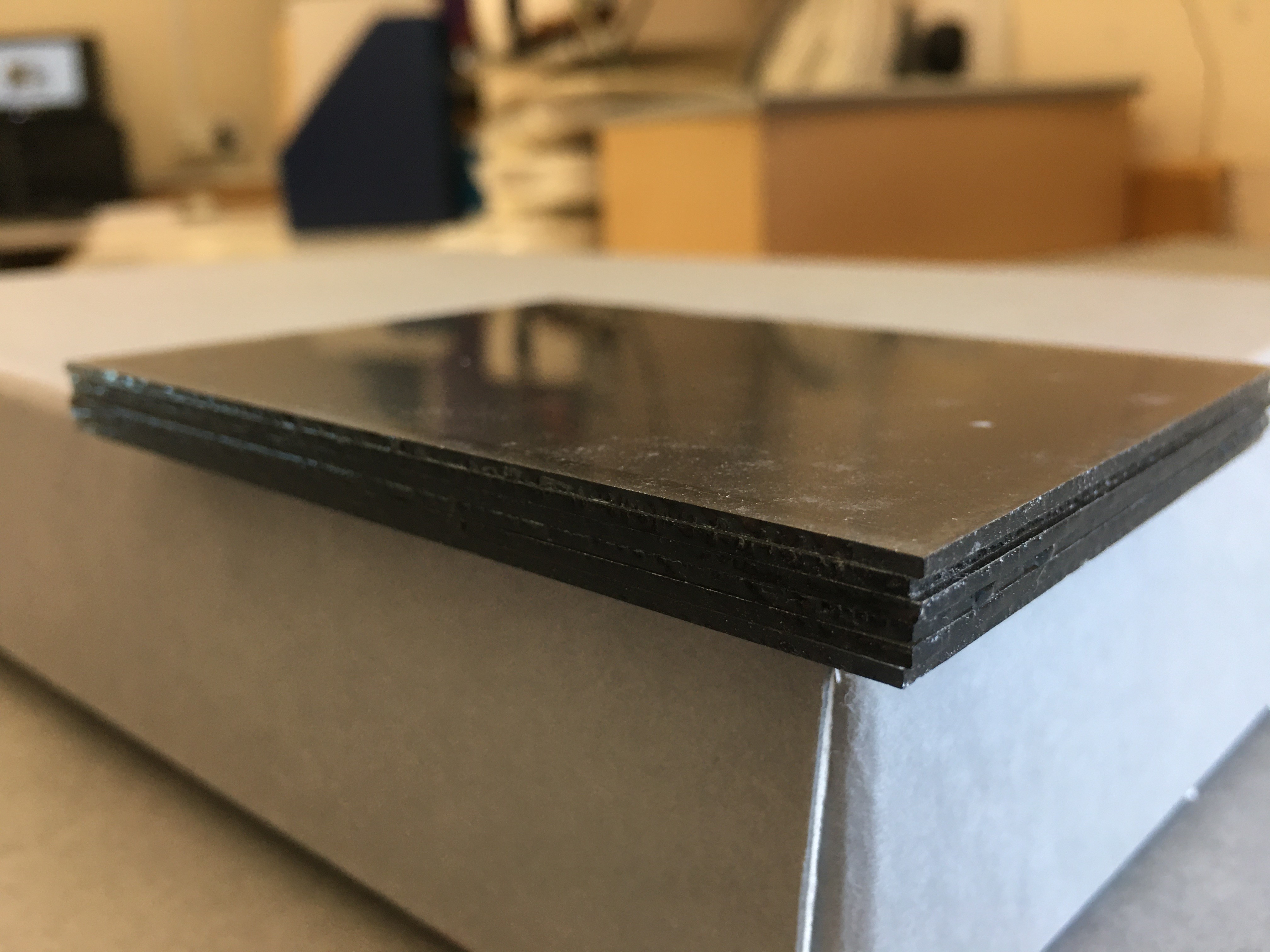
In an attempt to separate the negatives, I tried the following:
● Aqueous treatments. I sacrificed four fused negatives to experimentation. The treatment went through four stages, starting with gentle humidification and ending with total immersion in water for nearly a week. But to my surprise, nothing budged the fused glass.
● The dental floss approach. This idea was put to me by a colleague, and I thought it worth a try using dental floss to separate the plates. But I found it very awkward, needing four hands and far too much effort. The awkwardness could be extremely dangerous when handling thin glass.
● Levering with a very small metal spatula. This created too much focussed stress on the glass substrate. Snapping the glass was a serious risk. However, the small spatula was a good way to identify a possible entry point for a thin Melinex® strip (next point).
● A thin Melinex® (Mylar) strip between the negatives. After locating a way in between the fused plates, I tried separating the plates using thin Melinex (I found 36 μm best for this) cut into a strip of Melinex long enough to protrude generously all around the glass negative to make handling safer and easier. Once a way in has been identified, the thin Melinex slides in and acts as a very thin wedge, teasing the fused surfaces apart without putting undue upward stress on the fragile glass. Crucially, the process requires minimal force. The glass negatives remain supported on a clean, flat paper surface.
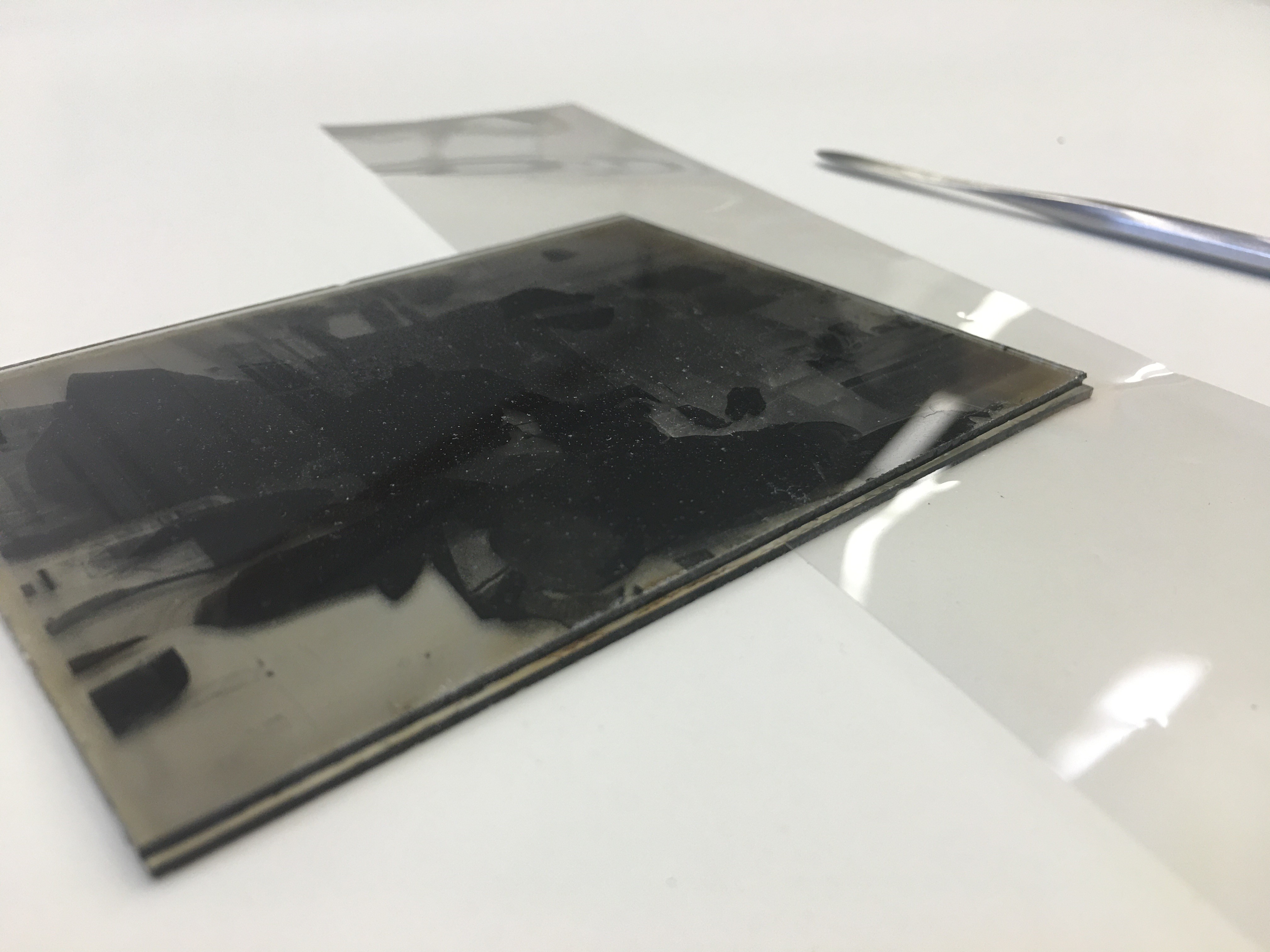
On release, it became apparent that these negatives were only fused together at the very edge of the emulsion layer. After the edges were separated, the negatives came apart easily without damage to either the substrate or the emulsion layer. I had been concerned that the Melinex, though thin, may have been too stiff and sharp-edged, and that it may have scratched the emulsion layer. I did notice some very minor damage to the emulsion at the very edge where the fusing had been, but it was not as bad as I had feared. Magnification was needed to see the damage. I took care to use new, cleanly cut, unblemished Melinex.
Interestingly, I have found that if the fused negatives were left out on the table in the conservation studio for 20 minutes or so before using the thin Melinex strip, they often seemed to come apart more easily. This might simply be due to the effects of acclimatising to temperature or humidity changes causing shifts in the emulsion.
I have used the thin Melinex wedge method successfully on many fused negatives. Unfortunately, a few of them have refused to come apart no matter what I tried. I decided to wrap those negatives back up and leave them for another day, hoping for some new ideas.
Conclusion
When Bedfordshire Archives began the huge task of cataloguing the 250,000 glass negatives in The Bedfordshire Times archive, the Conservation department was faced with two problems: first, cracked negatives, and second, glass negatives fused together following historical water damage.
The first task was to find a quick temporary fix for the cracked negatives so that Conservation could keep up with the cataloguing. As there was very little room for expansion and a strong preference to store the negatives in their original sequence, the storage solution needed to be safe but not bulky. I was able to fix the glass fragments in place with remoistenable tissue. The cracked negatives could then be wrapped and placed back in their original boxes.
The second task was to find a way to separate fused negatives. A number of experiments were carried out. Aqueous methods did not work, but I was able to separate many of the negatives working dry using the Melinex® wedge method.
Bibliography
Vasallos, Ioannis, “Picking up the (broken) pieces: Adapting a treatment to stabilise and ensure access to severely damaged photographic glass plate negatives at The National Archives, UK”, The Book and Paper Gathering, posted 27th October 2022. (This article also has an excellent and very useful bibliography.)
Suppliers
5 gsm kozo, wheat starch, stiff paper, 36 μm Melinex®: https://www.cxdinternational.com/
Silversafe® 90 x120 mm four-flap folders: https://conservation-resources.co.uk/
Biography
Alison Faden graduated from Camberwell in 2010 with an MA in Conservation, specialising in books and paper. After internships at the British Library and the Leather Conservation Centre in Northampton, she has worked as a book and paper conservator, most recently at Bedfordshire Archives.
 The Book & Paper Gathering