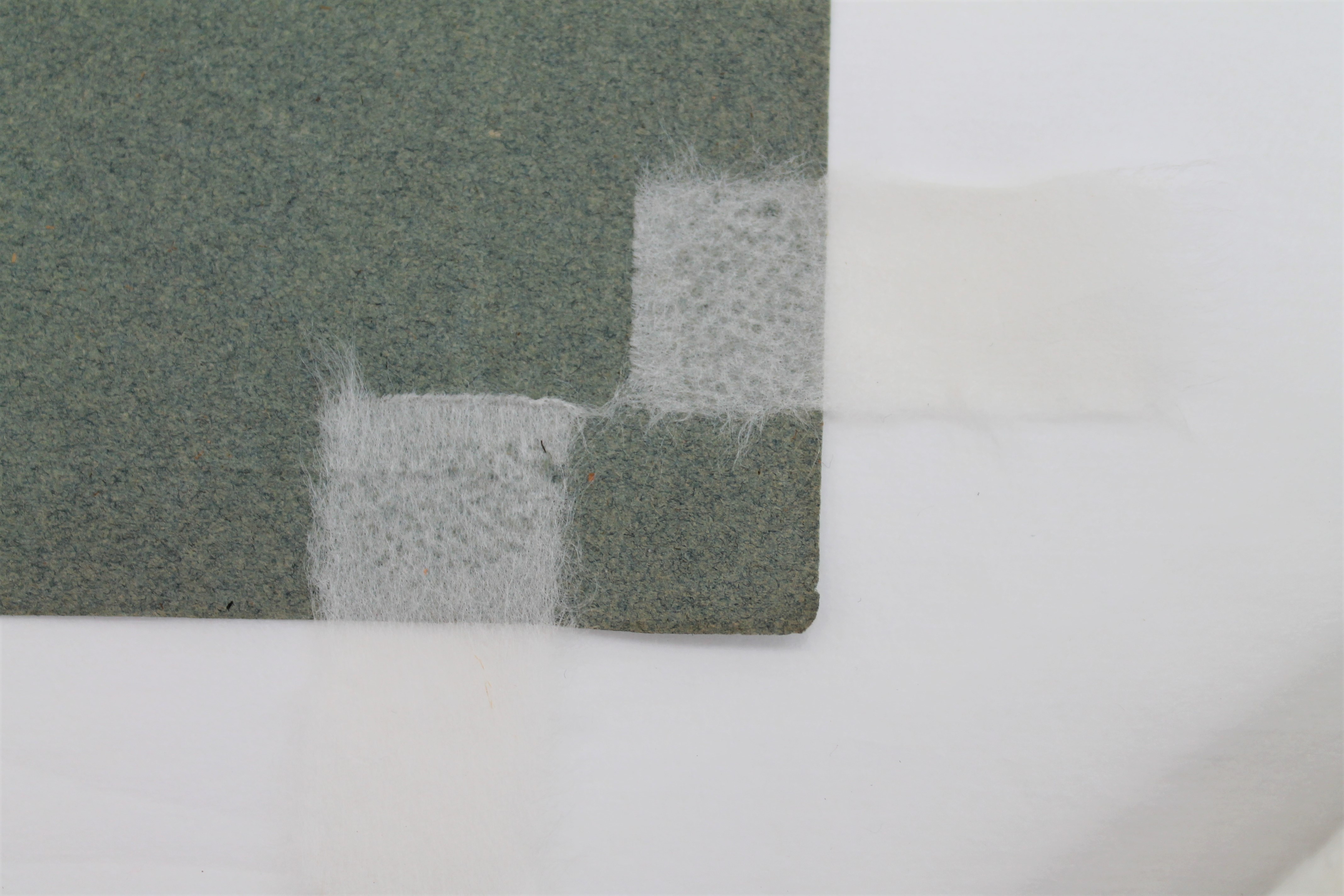
When considering the display of herbarium sheets, one of the main concerns is how to attach and release the specimen with the least possible disturbance to the specimen and its support. At the Natural History Museum, London, I have found that the micro-dotted technique is the best way of putting up such a display. The micro-dotted method is the even application of the adhesive, i.e., wheat starch paste, to a surface in the form of dots (Fig. 1). This allows the adhesive to hold the attachment quite well. It also enables its easy release by simply peeling off the paper tab, without the need for humidification or any other treatment.
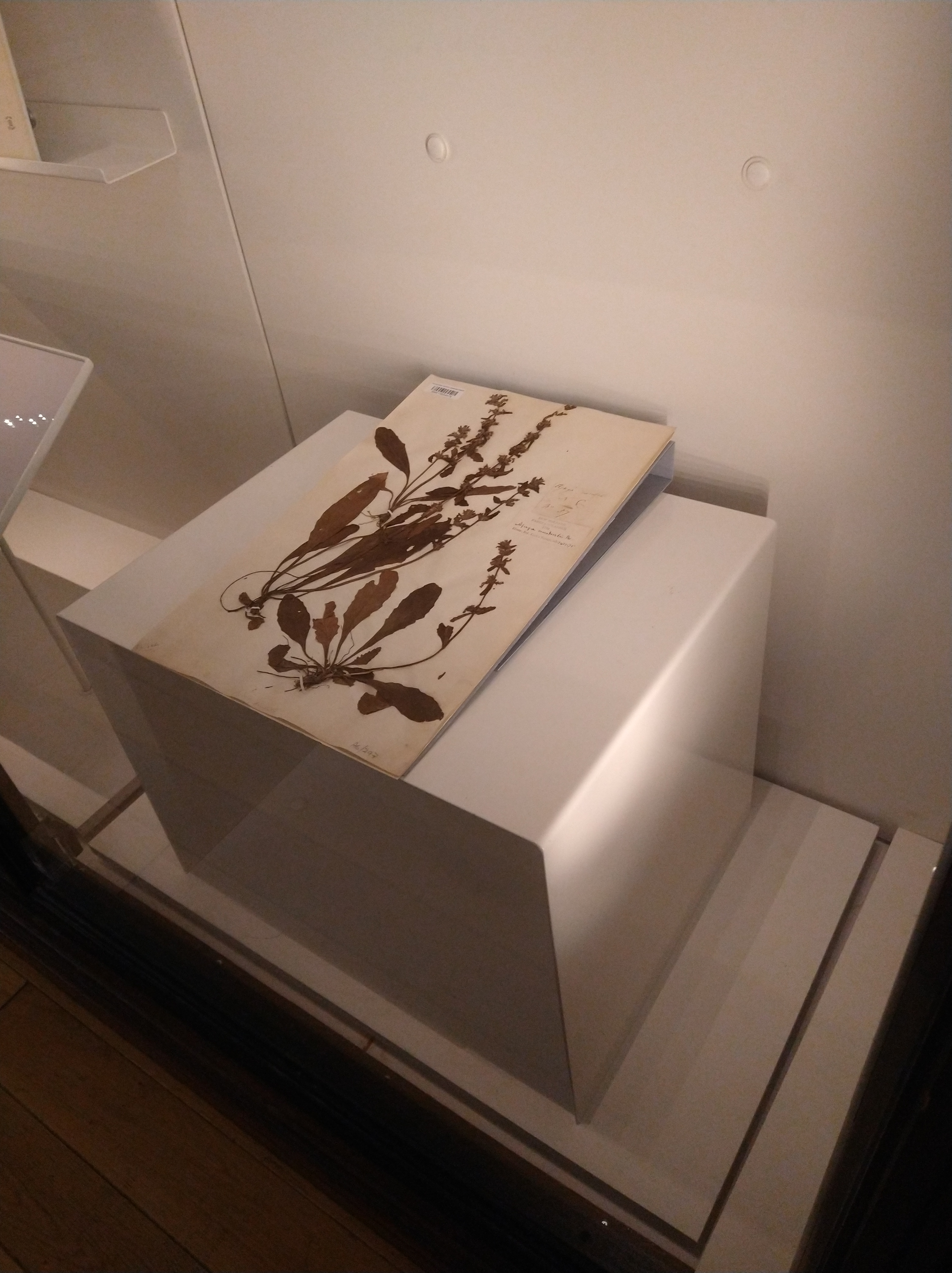
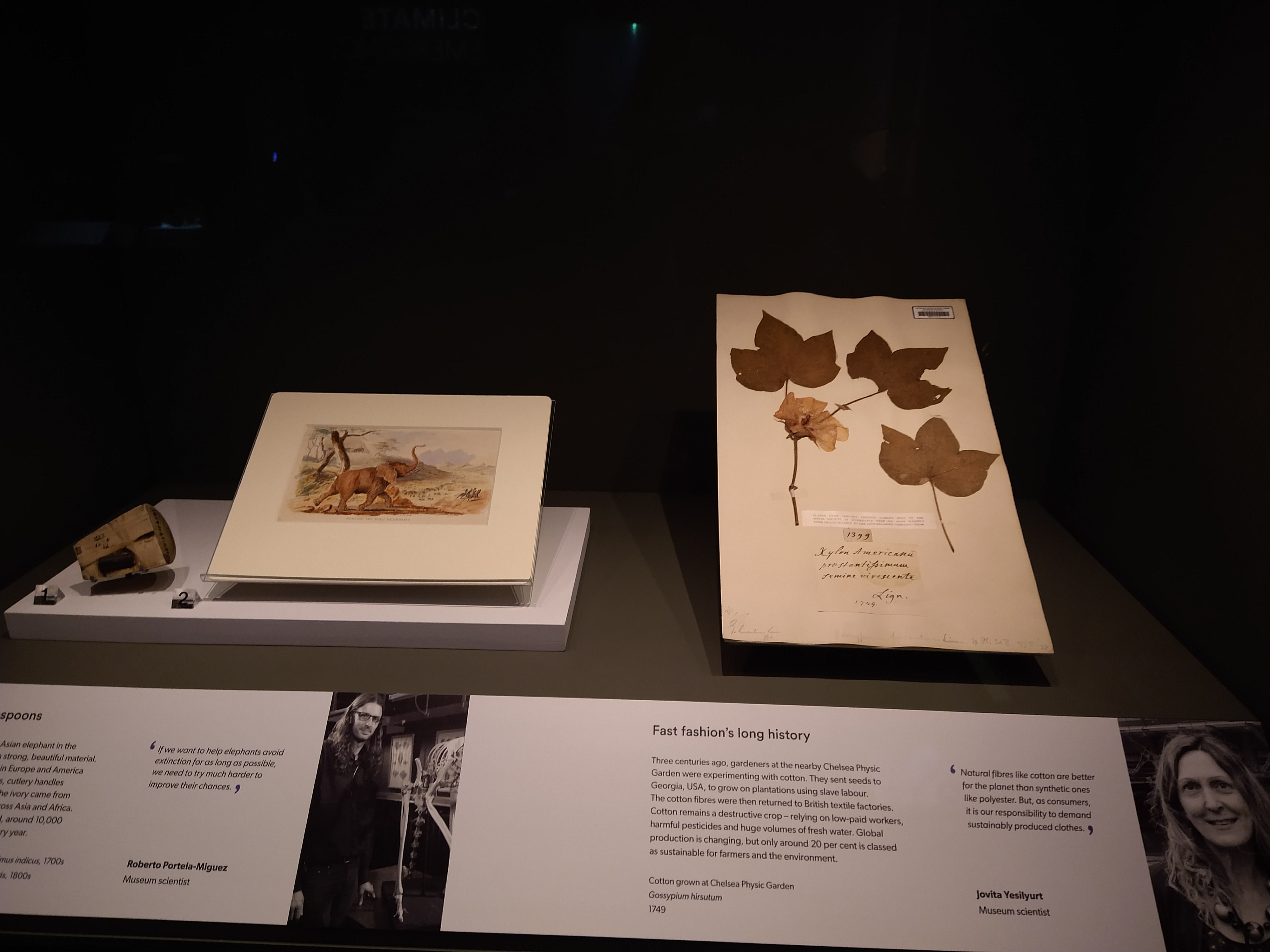
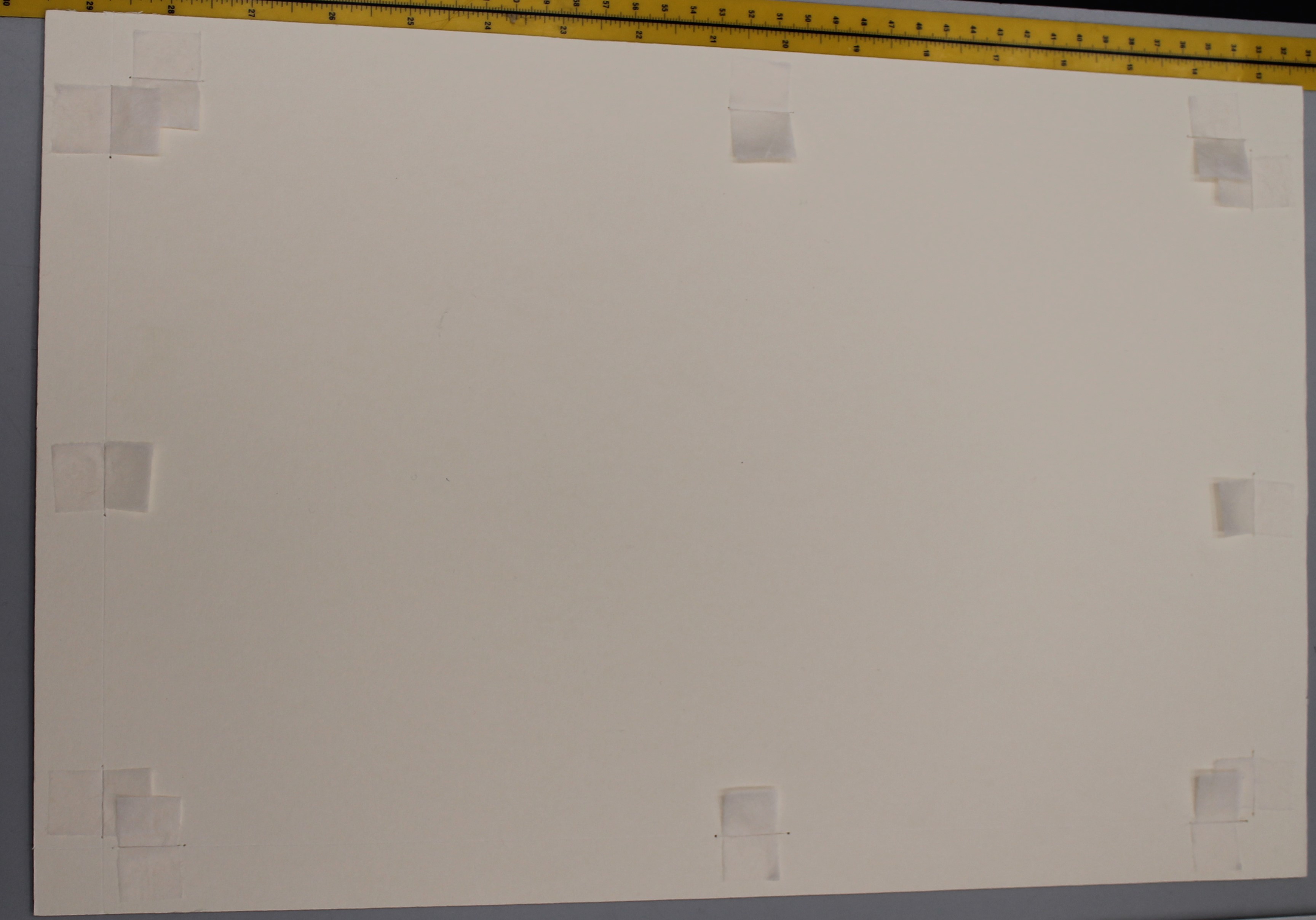
At NHM, the herbarium sheets are put on display with the request that no support should be visible to the public (Figs. 2, 3). To meet this request, the herbarium specimen is placed on a cotton paper board with bevelled edges. The bevelled edges keep the board discreetly out of the viewer’s sight whilst it provides support and additional buffering for the herbarium sheet within the display case. The board is slotted around the border to allow tabs of 10 gsm kozo paper to pass through (Fig. 4). The herbarium specimen is attached to those tabs.

A short note on my favourite tool, the spatula with one end covered with a piece of Velcro® (hook side – Fig. 5). This tool makes using the micro-dotted method for the display of the herbarium sheets extremely easy.
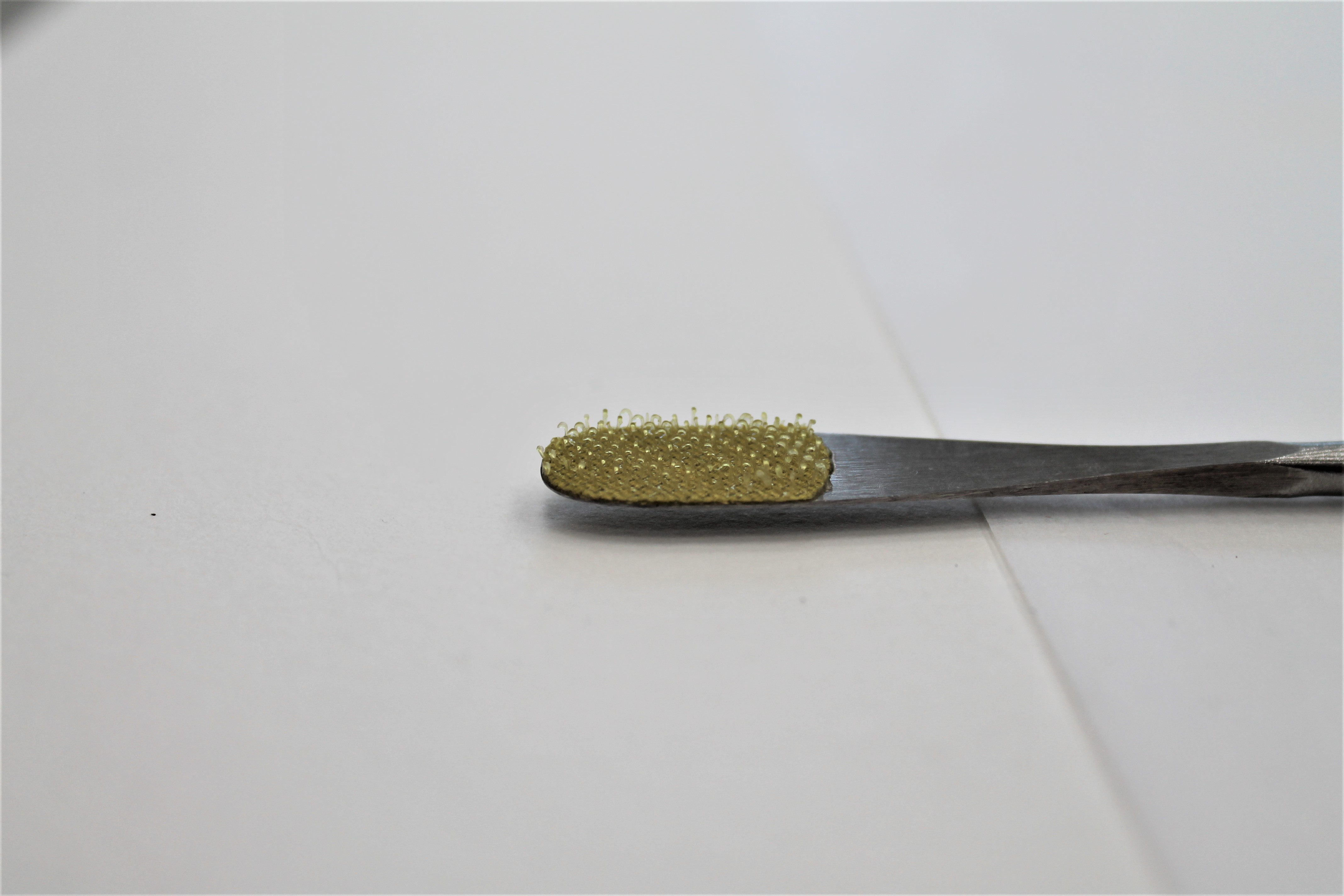
For the display preparation, you will need two small glass tiles, that spatula with one end covered with Velcro, a piece of felt (or Bondina® and blotter), a small weight, a cotton board aperture off-cut (from a window mount lid) 5 mm bigger than the herbarium sheet, adhesive of your choice and… your herbarium sheet.
- Prepare the aperture off-cut, placing the wider side as recto, with the bevelled edges facing down. (This is a great way of recycling!) Make marks approximately 1 cm from the edge and cut slots for the Japanese paper strips to go through. Use the herbarium specimen as a guide for the position of the slots. Avoid fragile areas and favour blank areas, if you can.
- Fold the kozo strips and pass them through the slots in the board from the recto side, using the creased end to go through. Then open the two ends on the surface of the board ready to be attached to the verso of the herbarium specimen support (see Fig. 4a – closeup). The folded strips offer an additional advantage. When the edges of the strips become worn out by the attachment and detachment of different herbarium sheets, they can be trimmed and replaced with the unused part of the same strip.
- Place a small dollop of adhesive on top of a glass tile, and place another glass tile on top. Then swipe the top tile to get a nice, even surface of adhesive on the bottom tile (Fig. 6).
- Place the herbarium sheet on top of the bevelled edge board.
- Swiftly touch the Velcro® end of the spatula to the adhesive on the glass tile and then insert the same end of the spatula, adhesive side down, between the herbarium specimen and the kozo strip.
- Apply the adhesive to the Japanese paper strip.
- Attach the herbarium sheet onto the Japanese paper strip by applying a bit of pressure with your fingers to the spot before covering with a piece of felt (or Bondina® and blotter) and placing a small weight on top for a minute or two. Repeat as needed.
- To detach, simply insert a thin spatula between the herbarium sheet (verso) and the Japanese paper strip. Minimum movement is needed to release the herbarium sheet. No residue is left on the verso of the herbarium sheet.

Konstantina Konstantinidou is a senior paper conservator at the Natural History Museum, London. She has worked as a book and paper conservator on a number of short-term projects at the V&A, National Trust, Oxford University, University College London and The National Archives, UK, prior to taking her current post. She has an MA in Conservation Studies from Camberwell College of the University of the Arts London, and she has been an accredited member of the Institute of Conservation (UK) since 2017. Konstantina finds the Natural History Museum’s collections fascinating in many ways and a great field for conservation research. Her conservation treatment on the manuscript of Hermann’s Sri Lankan drawings was published in Care and Conservation of Manuscripts CC17 Proceedings1. Her survey of the Natural History Museum’s x-ray film collection led to the publication of a research paper suggesting organic elemental analysis as an alternative way to identify cellulose nitrate films2.
Footnotes
1 Konstantina Konstantinidou, Charles E. Jarvis & Sonja Schwoll (2020), ‘The conservation of Paul Hermann’s 17th century Sri Lankan drawings: A unique volume with many challenges.’ Proceedings from the 17th Seminar of Care and Conservation of Manuscripts, Copenhagen, University of Copenhagen
2 Konstantina Konstantinidou, Stanislav Strekopytov, Emma Humphreys-Williams & Mark Kearney (2017), ‘Identification of cellulose nitrate x-ray film for the purpose of conservation: Organic elemental analysis.’ Studies in Conservation, 62:1, 24–32, DOI: 10.1080/00393630.2016.1150411
 The Book & Paper Gathering